

Which Gulf city should you fly into in Business Class from the UK?
Dubai, Doha, Abu Dhabi, Bahrain, Kuwait, Riyadh, Jeddah and Muscat are eight arrivals across six countries — eight separate fares, six sets of entry rules, and no single "Gulf" price. Choose the right city before you book. ATOL protected.
- Eight arrivals across six countries, not one "Gulf" fare
- The big three hub cities are destinations in their own right
- Seven-hour sectors — a different call from ultra long-haul
Quick answer
We fly Business Class from the UK to 8 Middle East destinations. The lowest fare right now is From £1,344 return to Kuwait (KWI). Each destination is priced separately, so open the one you are actually flying to for its fare, airport and UK departure options. What you pay depends on your dates and what is available when we quote.
- Destinations
- 8
- Lowest fare
- From £1,344
- First from
- From £2,263
- UK departures
- 8
Every Middle East destination we price
8 destinations, lowest fare first. Each has its own fares, airport and UK departure options.
- Business Class flights to Kuwait From £1,344
- Business Class flights to Bahrain From £1,346
- Business Class flights to Dubai From £1,365
- Business Class flights to Riyadh From £1,444
- Business Class flights to Muscat From £1,444
- Business Class flights to Jeddah From £1,460
- Business Class flights to Doha From £2,333
- Business Class flights to Abu Dhabi From £2,565
Where do you want to go?
8 authored cities, each with its own airport, routing and fare.
-
 Dubai Dubai DXB Business From £1,365
 -
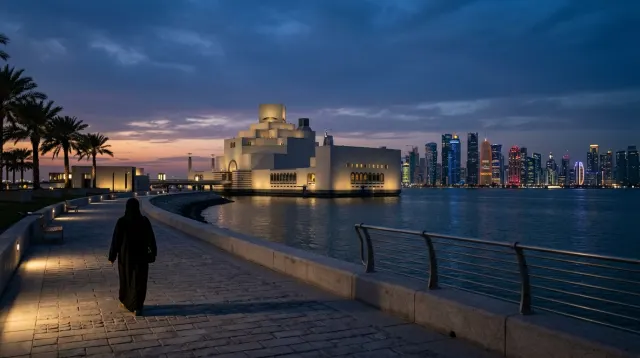 Doha Qatar (DOH) Business From £2,333
 -
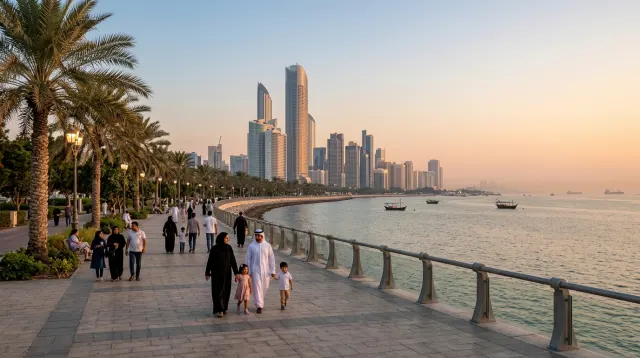 Abu Dhabi Abu Dhabi (AUH) Business From £2,565
 -
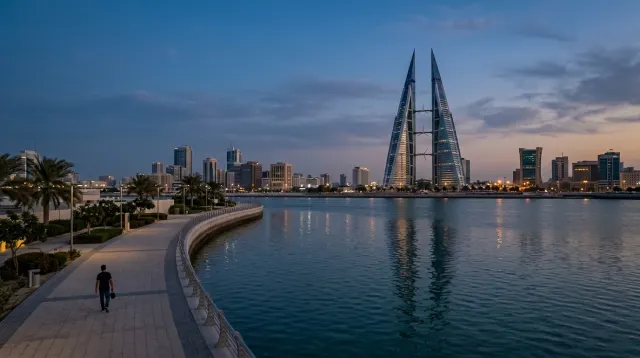 Bahrain Bahrain (BAH) Business From £1,346
 -
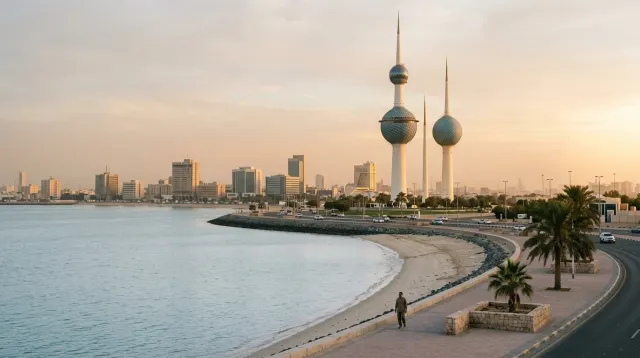 Kuwait Kuwait (KWI) Business From £1,344
 -
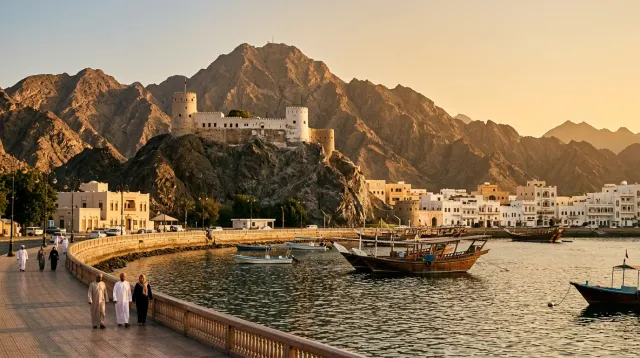 Muscat Muscat (MCT) Business From £1,444
 -
 Riyadh Riyadh (RUH) Business From £1,444
 -
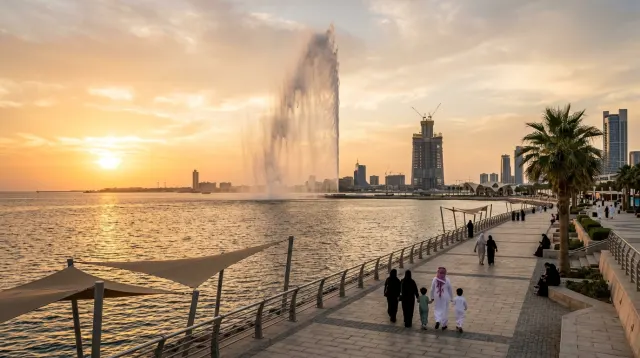 Jeddah Jeddah (JED) Business From £1,460
Airlines that compete on UK–Middle East
Product notes live on each airline page. Availability is confirmed on your dated quote.

Emirates
Cabin, seat and lounge detail for Emirates on the UK–Middle East routes we ticket.
View Emirates
Qatar Airways
Cabin, seat and lounge detail for Qatar Airways on the UK–Middle East routes we ticket.
View Qatar Airways
British Airways
Cabin, seat and lounge detail for British Airways on the UK–Middle East routes we ticket.
View British AirwaysPopular flight routes
Our Business Class returns from London (LHR). Other UK origins are priced on each destination.
How to read these fares
These are 8 separate fares, not one “Middle East fare”, not a ranking and not a savings claim. Each destination carries its own dated figure.
- Business, lowest From £1,344 Kuwait
- Business, highest From £2,565 Abu Dhabi
- First Class range From £2,263–£4,918 Across 8 cities
These are our return fares from the UK. Fares move with your dates and availability, so compare like with like — a one-way screenshot or a different month will not match.
Everything you need to know
Written as the decision layer above the individual destinations.
The Gulf is the one region where travellers routinely confuse the airline with the airport. Emirates, Qatar Airways and Etihad each built a hub here, and those hubs — Dubai (DXB), Doha (DOH) and Abu Dhabi (AUH) — are full destinations in their own right, not just places to change planes. Add Bahrain, Kuwait, Muscat, Riyadh and Jeddah and you have eight arrivals across six countries, each with its own fare, its own entry rules and its own reason to go.
There is no single "Gulf fare". As of 20 August 2026 the spread across those eight ran from £1,365 to £2,565 — the most expensive Gulf arrival costs close to double the cheapest, for a flight of almost identical length. This overview explains why, so you can pick the city on purpose rather than by accident.
Jump to
Which city · Fare comparison · Why the hubs cost more · Where London is not cheapest · Is 7 hours worth a bed? · First Class · Hub or destination · Entry rules · Airport traps · A region that moved in 2026 · UK airports · Booking · FAQs
Which Gulf city should you land in?
Fly into the city you are actually staying in. That sounds obvious, and it is the single most common mistake we correct on Gulf enquiries — people book Dubai because Dubai is familiar, then drive ninety minutes to Abu Dhabi, or transit Doha to reach a meeting that was always in Riyadh. The eight arrivals below are separate commercial markets.
- Business Class flights to Dubai (DXB) — the largest UK-to-Gulf market by a wide margin, and consistently the lowest Gulf fare we hold. The widest choice of dates, departure times and UK airports. If your plans are flexible or your budget is the constraint, start here.
- Business Class flights to Abu Dhabi (AUH) — a calmer, quicker airport and the correct arrival for Yas Island, Saadiyat, the Louvre Abu Dhabi and the capital's government and energy district. About a ninety-minute drive from Dubai, which is far enough to matter.
- Business Class flights to Doha (DOH) — Qatar's single airport, compact and fast to clear. West Bay, the Museum of Islamic Art and the stadium infrastructure are all close to the terminal.
- Business Class flights to Bahrain (BAH) — an island kingdom with its own business calendar, its own licensing regime and a causeway link to Saudi Arabia's Eastern Province. Not a Dubai suburb, and priced quite differently.
- Business Class flights to Kuwait (KWI) — predominantly a business and family-visit market from the UK, with demand shaped by the energy sector rather than by tourism.
- Business Class flights to Muscat (MCT) — Oman's capital, and increasingly a genuine leisure arrival rather than a transit point. Mountains, wadis and a coastline that reads nothing like the UAE. Note that Oman has the shortest visa-free allowance of the eight.
- Business Class flights to Riyadh (RUH) — Saudi Arabia's administrative and business capital, and the arrival that has changed most in the last two years as the country has opened to leisure travel and new carriers have entered the market.
- Business Class flights to Jeddah (JED) — the Red Sea coast, the historic Al-Balad district, and the conventional gateway for pilgrimage travel to Mecca and Medina.
Gulf Business Class fares compared
Eight destinations, eight different fares. These are our own from-prices, checked 20 August 2026. They are a briefing to help you choose a city — not a live availability feed, and not a savings claim against anyone else.
| Destination | Airport | Business Class from | First Class from |
|---|---|---|---|
| Dubai Business Class | DXB | £1,365 | £2,625 |
| Kuwait Business Class | KWI | £1,344 | £2,263 |
| Bahrain Business Class | BAH | £1,346 | £4,496 |
| Riyadh Business Class | RUH | £1,444 | £2,463 |
| Muscat Business Class | MCT | £1,444 | £2,463 |
| Jeddah Business Class | JED | £1,460 | £3,629 |
| Doha Business Class | DOH | £2,333 | £4,847 |
| Abu Dhabi Business Class | AUH | £2,565 | £4,918 |
Read that table from the top and the pattern is clear. Dubai, Kuwait, Bahrain, Riyadh, Muscat and Jeddah cluster within a few hundred pounds of each other. Doha and Abu Dhabi sit in a band of their own, roughly a thousand pounds clear of Dubai. Every one of these flights covers a broadly comparable distance from the UK in a broadly comparable time. Distance is not what is driving the spread.
Why the two "premium" hubs often cost the most
It is counter-intuitive, and it catches people out. Doha and Abu Dhabi are the home airports of two of the most award-decorated business cabins in the sky, and they are also — on our current fares — the two most expensive Gulf cities to fly into. Dubai, the busiest and most commercial of the three, is the cheapest.
The reason is competition, not quality. Dubai is served from more UK airports, by more airlines, more times a day than any other Gulf city. That volume of capacity puts constant downward pressure on the fare. Doha and Abu Dhabi are each served by a narrower set of operators into a single home hub, so there is less competitive pressure on the price of a seat that terminates there.
There is a second effect, and it is the one worth understanding before you book. A large share of the seats sold on UK-to-Doha and UK-to-Abu Dhabi flights are not sold to people going to Doha or Abu Dhabi. They are sold to people connecting onward to Asia, Africa or Australia. Those connecting fares are priced for a different and more competitive market. The seat that stops at the hub — the point-to-point fare — is priced for a captive one. This is why a through fare to a city beyond the Gulf can sometimes cost less than a fare that simply stops at the hub, even though it is a longer journey. If that sounds like a quirk you could use, it sometimes is, and it is worth asking us about explicitly.
None of that makes Doha or Abu Dhabi bad value. If the destination is Doha, the destination is Doha, and a ninety-minute drive from a cheaper airport in a different country is not a substitute. It does mean you should not assume the well-known premium carriers are automatically the expensive option, or that Dubai's lower fare reflects a lesser product. On these routes it mostly reflects how many seats are chasing how many passengers.
The Gulf routes where London is not the cheapest departure
On almost every long-haul market we handle, London carries the lowest fare. It has the most capacity, the most competition and the most airlines. The Gulf contains two exceptions worth knowing about, and both run against the grain of the usual advice.
On our current Abu Dhabi fares, Newcastle departs cheaper than London — and not by a rounding error. Birmingham also undercuts London on the same route. On Jeddah, Manchester departs cheaper than London. If you live in the North East, the Midlands or the North West and you have been assuming you need to get yourself to Heathrow first, these two routes are worth pricing properly before you book a connecting train.
The reverse is true elsewhere and just as sharply. On Kuwait, the London fare is more than £400 below the Manchester fare and over £800 below Glasgow. Bahrain and Riyadh show the same London advantage. So the honest answer to "should I fly from my local airport?" in this region is genuinely city-by-city, and anyone who gives you a blanket rule is guessing. Each destination lists the UK origins that actually carry its fare, with the price against each one, so you can see the real number rather than a general claim.
One practical note: a cheaper regional departure often means a connection rather than a nonstop, and a connection has a cost in time and in risk that does not appear in the fare. We will show you both and let you weigh them. A two-hundred-pound saving that costs you five hours and a missed-connection worry is not always the better ticket.
Is seven hours long enough to need a flat bed?
This is the honest question on Gulf routes, and it deserves a different answer from the one we would give you for Sydney or Johannesburg. London to Dubai is around seven hours. That is long-haul, but it is at the short end of it — roughly half a Sydney sector and about two hours less than the US West Coast.
The direction and the timing matter more than the duration. A westbound daytime sector back to the UK is comfortable in any decent seat; you are awake for most of it, you eat, you work, you land. An eastbound overnight flight that arrives into the Gulf at breakfast is where a flat bed converts directly into something measurable — a usable working day instead of a wasted one. If you are landing at 7am and walking into a meeting at 11am, the bed is not a luxury, it is the difference between arriving functional and arriving wrecked.
If you are landing in the evening with a free next morning, the calculation changes and it is fair to ask whether the cabin is worth the premium. We hold no Premium Economy fares on the eight Gulf routes covered here — the sector length means the cabin is far less widely sold here than on ultra long-haul — but if you want the comparison across cabins for your specific dates, ask and we will price what is genuinely available rather than assume the more expensive cabin is the right one. The Business Class flights from the UK overview sets out what the cabin actually buys you on a sector of this length.
First Class to the Gulf — and why the premium varies so much
The Gulf is one of the few regions where First Class is widely available from the UK and genuinely worth a look, because several of the carriers operating here treat First as a flagship product rather than an afterthought. What surprises people is how differently the premium is priced from city to city.
Look at the two right-hand columns in the fare table together rather than separately. On our current fares the step from Business to First is modest on some Gulf routes and very steep on others — Kuwait's First fare sits at well under twice its Business fare, while Bahrain's sits at well over three times. Dubai lands in between at roughly double.
That variation is about which aircraft and which cabin is scheduled on the route, and how many First seats exist to sell. A route flown by an aircraft with a large, frequently-sold First cabin prices differently from one where First is a handful of seats on a single daily service. It means the generic advice — "First is about double Business" — is wrong on this region roughly as often as it is right. If First Class is something you would consider at the right number, the Gulf is the region where it is most worth asking, because the answer varies so much by city. Our First Class flights from the UK overview covers what the cabin includes.
Gulf hub, or Gulf destination?
These are two different trips and they price differently, so it is worth being explicit with us about which one you want.
A Gulf city as your final destination is a point-to-point fare — you fly there, you stay, you fly back. A Gulf hub used to reach somewhere else is a connection, and a single through fare is very frequently better value than two separate tickets bolted together, as well as protecting you if the first leg runs late. If you are heading onward, the Business Class flights to Asia overview and the Business Class flights to Australia overview cover the destinations most commonly reached this way, and the Business Class flights to Africa overview covers the East African routes that connect well through this region.
The stopover question — and why "free" is usually the wrong word
Several Gulf carriers offer arrangements that let you break a connecting journey and spend a night or two in the hub city. These are marketed hard, and they are often described online — including by travel sites that should know better — as "free stopovers". That description is out of date, and it is worth correcting, because people book on the strength of it.
Qatar's stopover programme is operated commercially through Discover Qatar. It permits a break of roughly 12 to 96 hours, and the accommodation is purchased, not complimentary — the headline rate starts at around USD 14 per person per night, which is inexpensive for a Doha hotel but is emphatically not nothing. Rates rise sharply by property and by date, availability is finite, and the whole arrangement is conditional on your itinerary qualifying in the first place.
That is a good deal on its merits. It is just not a free one, and the difference matters when you are budgeting. If a stopover is part of what you want, tell us at the enquiry stage rather than after ticketing, because whether your itinerary qualifies depends on how the connection is constructed — and that is decided when the ticket is issued, not afterwards.
The more general point: a stopover is worth doing when the hub city is somewhere you actually want to spend two days. It is worth much less when it is a second airport day bolted onto an already long journey. Tell us what you are trying to achieve and we will price it honestly rather than selling you a night you did not want.
Entry rules differ sharply across these six countries
This is where the "Gulf" shorthand does the most damage. These are six sovereign countries with six separate immigration regimes, and the differences are large enough to change a trip. Two points catch UK travellers out repeatedly.
Oman is the short one. UK citizens currently get a visa-free stay of only 14 days — the shortest allowance of the eight Gulf destinations covered here, and short enough that a relaxed three-week Oman itinerary does not fit inside it. Longer stays need a visa arranged in advance. People assume the Gulf is uniformly generous on entry because the UAE is, and Oman quietly is not.
Qatar is 30 days, not 90. A good deal of published guidance still quotes a longer allowance. If you are planning an extended stay, or combining Doha with onward travel and returning, check the current position rather than relying on a number you read on a forum.
Kuwait needs a visa, and there is an exception worth flagging. A visa is mandatory for UK travellers and is normally available on arrival or online. However, British citizens born in Afghanistan, Iran, Iraq, Lebanon, Pakistan, Sudan, Syria or Yemen cannot use the visa-on-arrival route and must apply through the Kuwaiti Embassy in advance. If that applies to you, start it early — turning up at the border expecting a visa on arrival is the one scenario here that ends the trip before it begins. Kuwait also asks for a return or onward ticket and proof of accommodation at the border.
Passport validity rules also vary across the region and are not the blanket "six months" that gets repeated everywhere. Applying a rule of thumb here is exactly how people get turned away at check-in. Check the specific country you are entering, and check it against the official source for that country — not against a summary, and not against this overview. Entry rules change without notice and we are a flight specialist, not an immigration authority.
Saudi Arabia and the FCDO advisory
Travellers sometimes see that the Foreign, Commonwealth and Development Office advises against travel to part of Saudi Arabia and assume the whole country is off-limits. It is not. The advisory is geographically specific and it has two tiers: the FCDO advises against all travel within 10km of the Yemen border, and against all but essential travel to areas between 10km and 80km from that border. Both zones sit in the far south-west of the country. Riyadh and Jeddah are well outside the 80km zone and are not covered by this advice — Riyadh is in the centre of the country, and Jeddah is on the Red Sea coast several hundred kilometres north of the restricted area.
That distinction matters for insurance as much as for peace of mind, because travel insurance commonly voids cover for travel against FCDO advice. Check the current advisory yourself before you travel, since advisories are revised, but do not write off a Riyadh or Jeddah trip on the assumption that the whole country is covered by it.
Two airport traps worth knowing
Dubai has two airports. Dubai International (DXB) is the one you want and the one UK services use. Al Maktoum International (DWC), out at Dubai World Central near Jebel Ali, is a very long way from the city and from most hotels. No UK scheduled service currently operates into DWC, but the code appears in search results and on itineraries often enough that it is worth checking the airport code on any quote you are given — from us or from anyone else. Landing at the wrong Dubai airport is an expensive taxi and a bad start to a trip.
"Non-stop" on a booking site does not always mean no landing. On most search engines "0 stops" means one flight number, not one continuous flight. A service can carry a single flight number and still touch down en route. Expand the segments on any itinerary before you assume it runs straight through, particularly on the longer connecting routes beyond the Gulf. We confirm the actual routing, the operating carrier and the aircraft before you book.
A region that moved a long way in 2026
We will be straight with you about something most travel sites will not be. UK-to-Gulf flying changed materially during 2026. Regional airspace disruption from late February onward forced widespread rerouting and suspensions across the Gulf, and the commercial aftermath has continued to work through airline schedules for months. Some UK routes were suspended and later restored on new dates. At least one long-standing route was withdrawn permanently. New entrants arrived — Riyadh Air operated its first-ever commercial flight on 10 June 2026, from Riyadh to London Heathrow, and has announced Manchester as a second UK point.
The practical consequence for you is that a good deal of what is published about which airline flies the Gulf from which UK airport is currently wrong, including on pages that look authoritative and were accurate when they were written. That is precisely why this overview does not carry a carrier-by-carrier route grid. We would rather hold no table than hold one that is confidently out of date, and in this region a table written today has a short shelf life.
What we do instead: we confirm the operating carrier, the routing and the aircraft at the point of quoting, against live schedules, for your specific dates. Our individual Emirates Business Class, Qatar Airways Business Class and Etihad Business Class pages carry the product detail — the seat, the cabin layout, the lounge and the service — which changes far more slowly than the schedule does. Each destination carries its own fare. Neither pretends to be a timetable.
UK departure airports
London carries the widest Gulf choice by a clear margin, and from several London airports rather than Heathrow alone. Of the Gulf carriers, Emirates has historically maintained the broadest UK footprint, reaching well beyond the obvious airports — including points that most long-haul carriers do not serve at all.
Beyond London, the regional picture is genuinely uneven and it varies by city rather than following a single pattern. Some Gulf destinations are reachable from Manchester, Birmingham, Glasgow and Newcastle on a single ticket; several are effectively London-only for a nonstop, with regional departures routing via a connection. As set out above, the fare consequence runs in both directions depending on which Gulf city you are heading for.
Rather than publish a regional grid that would age badly, each destination lists the UK origins that actually carry its fare, with the price against each one. That is a real, dated number rather than a general claim about what is theoretically possible.
Booking a Gulf itinerary
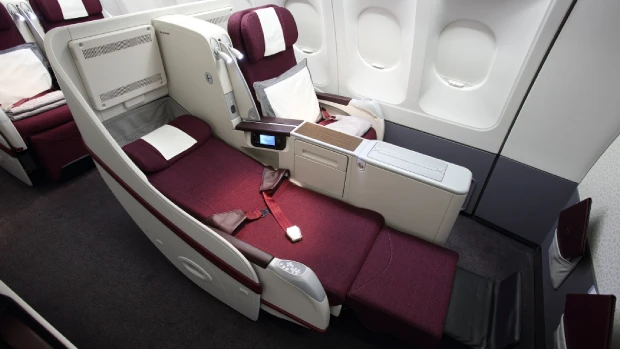
Tell us the city, your UK airport, your dates and your cabin. We will confirm the operating carrier and the aircraft, which matters more in this region than in most — the same airline can fly noticeably different business cabins on the same route depending on what is scheduled that day, and on a seven-hour overnight the difference between a genuine flat bed and an angled seat is the whole point of the ticket.
We will also tell you when the answer is no, or when a cheaper regional departure is not worth the connection. Bookings we ticket are ATOL protected where the scheme applies (ATOL Protected). If you would rather talk it through, call 07862 620009.
Cabin overviews: Business Class flights from the UK and First Class flights from the UK.
Middle East Business Class FAQs
Questions for this overview. City-specific detail stays on the Dubai, Doha, Abu Dhabi and the other destinations in this region.
Which Gulf city should I choose for Business Class from the UK?
Choose by where you are actually staying. Dubai (DXB) is the largest arrival and normally the lowest Gulf fare. Abu Dhabi (AUH) is quieter and correct for Yas Island, Saadiyat and the capital — about ninety minutes from Dubai, which is far enough to matter. Doha (DOH) is compact and quick to clear. Riyadh (RUH) is the Saudi business capital and Jeddah (JED) the Red Sea coast. Bahrain (BAH), Kuwait (KWI) and Muscat (MCT) are distinct country arrivals, not Dubai substitutes.
How much is Business Class to the Gulf from the UK?
It varies by city rather than by region. As of 20 August 2026 our fares ran from Dubai at £1,365 up to Abu Dhabi at £2,565, with Kuwait £1,344, Bahrain £1,346, Riyadh £1,444, Muscat £1,444, Jeddah £1,460 and Doha £2,333 in between.
Which Gulf destination is cheapest in Business Class?
Dubai, at £1,365 on our current fares. It is served from more UK airports by more airlines more often than any other Gulf city, and that competition keeps the fare down. It is the cheapest Gulf arrival, not a cheaper way to reach a different Gulf city.
Why is Doha more expensive than Dubai when Dubai is busier?
Because the price reflects competition rather than product quality. Dubai has far more UK capacity from far more operators, which holds the fare down. Doha and Abu Dhabi are each served into a single home hub by a narrower set of carriers. There is also a structural effect: many seats on UK flights to those two hubs are sold to passengers connecting onward, and connecting fares are priced for a more competitive market than the seat that simply stops at the hub.
Is London always the cheapest UK departure for the Gulf?
No, and the Gulf is unusual in that respect. On our current Abu Dhabi fares Newcastle departs cheaper than London, and Birmingham also undercuts it. On Jeddah, Manchester departs cheaper than London. On Kuwait, Bahrain and Riyadh the usual London advantage holds and it is substantial. It is genuinely city-by-city, so check the origin list for that destination rather than assuming.
Is Business Class worth it on a seven-hour flight to the Gulf?
It depends on direction and timing more than on distance. On an eastbound overnight landing at breakfast, a flat bed converts into a usable working day, and that is where the cabin earns its price. On a westbound daytime sector home you are awake throughout and a good seat does the job. If you land in the evening with a free morning, it is fair to ask whether the premium is worth it — we would rather price both than assume.
Do you have Premium Economy fares to the Gulf?
Not on the eight Gulf destinations in this overview. The sector is around seven hours, and Premium Economy is far less widely sold on Gulf routes than on ultra long-haul. If you want the cabin priced for your specific dates we will check what is genuinely available rather than quoting something that is not.
How much more is First Class than Business Class to the Gulf?
The premium varies far more than people expect. On our current fares Kuwait First sits at well under twice its Business fare, Dubai at roughly double, and Bahrain at well over three times. That reflects which aircraft and cabin is scheduled and how many First seats exist to sell. The common rule of thumb that First costs about double Business is wrong on this region about as often as it is right.
Is the Qatar Airways stopover free?
No. It is operated commercially through Discover Qatar, allows a break of roughly 12 to 96 hours, and the accommodation is purchased rather than complimentary — rates start at around USD 14 per person per night and rise by property and date. It is good value, but it is not free, and much of what is published online still describes it incorrectly. Whether your itinerary qualifies depends on how the connection is built, so raise it before ticketing.
How long can I stay in Oman without a visa?
UK citizens currently get 14 days visa-free — the shortest allowance of the eight destinations on this overview, and short enough that a three-week Oman itinerary will not fit inside it. Longer stays need a visa arranged in advance. Travellers often assume the whole Gulf is as generous as the UAE on entry, and Oman is not. Check the official Omani source before you book.
How long can I stay in Qatar without a visa?
30 days, not the longer allowance that a lot of published guidance still quotes. If you are planning an extended stay, or leaving and returning, confirm the current position against the official source rather than a forum post.
Is it safe to travel to Riyadh and Jeddah?
The FCDO advisory covering part of Saudi Arabia is geographically specific and has two tiers: it advises against all travel within 10km of the Yemen border, and against all but essential travel between 10km and 80km from that border. Both zones are in the far south-west. Riyadh sits in the centre of the country and Jeddah on the Red Sea coast, and neither is covered by this advice. That matters for travel insurance as well as peace of mind, since cover is commonly void for travel against FCDO advice. Advisories are revised, so check the current wording before you travel.
Will my flight land at DXB or DWC?
Dubai International (DXB) is the airport UK services use and the one you want. Al Maktoum International (DWC) is out at Dubai World Central near Jebel Ali, a long way from the city and most hotels, and no UK scheduled service currently operates into it. The code still appears in search results often enough to be worth checking on any quote. We confirm the arrival airport before you book.
Can I fly to the Gulf nonstop from Manchester or Birmingham?
It depends on the city. Some Gulf destinations are reachable from Manchester, Birmingham, Glasgow and Newcastle on a single ticket; others are effectively London-only for a nonstop, with regional departures routing via a connection. A cheaper regional fare frequently means a connection, which costs time and adds risk that the fare does not show. Each destination lists the UK origins that actually carry its fare.
Why does this overview not list which airline flies which route?
Because it would be out of date quickly. UK-to-Gulf schedules moved materially through 2026 — regional airspace disruption from late February forced widespread rerouting and suspensions, some routes returned on new dates, at least one was withdrawn permanently, and Riyadh Air entered the market with its first commercial flight from Riyadh to London Heathrow on 10 June 2026. We would rather confirm the operating carrier and aircraft against live schedules for your dates than publish a grid that reads authoritatively and is wrong.
How do I get a quote for a Gulf destination?
Use the form on here or email info@myupcomingtrip.co.uk. Name the Gulf city, your UK airport, your dates and the cabin. We will confirm the operating carrier and the aircraft, which matters here because the same airline can fly very different business cabins on the same route. Bookings we ticket are ATOL protected where the scheme applies (ATOL protected).
Depart from airports near you
UK origins priced across the destinations in this region.
- From London All · LON
- From Manchester · MAN
- From Glasgow · GLA
- From Birmingham · BHX
- From New Castle · NCL
- From NewCastle · NCL
- From London · LGW
- From London · LHR
Compare fares to top Middle East destinations
Switch cabin to see each city's own return from the UK.
Dubai Dubai DXB From £1,365 Our return Doha Qatar (DOH) From £2,333 Our return Abu Dhabi Abu Dhabi (AUH) From £2,565 Our return Bahrain Bahrain (BAH) From £1,346 Our return Kuwait Kuwait (KWI) From £1,344 Our return Muscat Muscat (MCT) From £1,444 Our return Riyadh Riyadh (RUH) From £1,444 Our return Jeddah Jeddah (JED) From £1,460 Our return Your journey, our priority
A written, dated quote from a UK team — not a checkout you have to second-guess.
- ATOL Protected UK financial protection on bookings we ticket.
- UK travel agency Licensed travel experts, not a screen-scraper.
- UK expert support Speak to someone who knows the routing.
- Flexible dates and cabins Tell us your window; we price around it.
Middle East flight FAQs
Questions for this overview. City-specific detail stays with each destination.
Choose by where you are actually staying. Dubai (DXB) is the largest arrival and normally the lowest Gulf fare. Abu Dhabi (AUH) is quieter and correct for Yas Island, Saadiyat and the capital — about ninety minutes from Dubai, which is far enough to matter. Doha (DOH) is compact and quick to clear. Riyadh (RUH) is the Saudi business capital and Jeddah (JED) the Red Sea coast. Bahrain (BAH), Kuwait (KWI) and Muscat (MCT) are distinct country arrivals, not Dubai substitutes.
It varies by city rather than by region. As of 20 August 2026 our fares ran from Dubai at £1,365 up to Abu Dhabi at £2,565, with Kuwait £1,344, Bahrain £1,346, Riyadh £1,444, Muscat £1,444, Jeddah £1,460 and Doha £2,333 in between.
Dubai, at £1,365 on our current fares. It is served from more UK airports by more airlines more often than any other Gulf city, and that competition keeps the fare down. It is the cheapest Gulf arrival, not a cheaper way to reach a different Gulf city.
Because the price reflects competition rather than product quality. Dubai has far more UK capacity from far more operators, which holds the fare down. Doha and Abu Dhabi are each served into a single home hub by a narrower set of carriers. There is also a structural effect: many seats on UK flights to those two hubs are sold to passengers connecting onward, and connecting fares are priced for a more competitive market than the seat that simply stops at the hub.
No, and the Gulf is unusual in that respect. On our current Abu Dhabi fares Newcastle departs cheaper than London, and Birmingham also undercuts it. On Jeddah, Manchester departs cheaper than London. On Kuwait, Bahrain and Riyadh the usual London advantage holds and it is substantial. It is genuinely city-by-city, so check the origin list for that destination rather than assuming.
It depends on direction and timing more than on distance. On an eastbound overnight landing at breakfast, a flat bed converts into a usable working day, and that is where the cabin earns its price. On a westbound daytime sector home you are awake throughout and a good seat does the job. If you land in the evening with a free morning, it is fair to ask whether the premium is worth it — we would rather price both than assume.
Not on the eight Gulf destinations in this overview. The sector is around seven hours, and Premium Economy is far less widely sold on Gulf routes than on ultra long-haul. If you want the cabin priced for your specific dates we will check what is genuinely available rather than quoting something that is not.
The premium varies far more than people expect. On our current fares Kuwait First sits at well under twice its Business fare, Dubai at roughly double, and Bahrain at well over three times. That reflects which aircraft and cabin is scheduled and how many First seats exist to sell. The common rule of thumb that First costs about double Business is wrong on this region about as often as it is right.
No. It is operated commercially through Discover Qatar, allows a break of roughly 12 to 96 hours, and the accommodation is purchased rather than complimentary — rates start at around USD 14 per person per night and rise by property and date. It is good value, but it is not free, and much of what is published online still describes it incorrectly. Whether your itinerary qualifies depends on how the connection is built, so raise it before ticketing.
UK citizens currently get 14 days visa-free — the shortest allowance of the eight destinations on this overview, and short enough that a three-week Oman itinerary will not fit inside it. Longer stays need a visa arranged in advance. Travellers often assume the whole Gulf is as generous as the UAE on entry, and Oman is not. Check the official Omani source before you book.
30 days, not the longer allowance that a lot of published guidance still quotes. If you are planning an extended stay, or leaving and returning, confirm the current position against the official source rather than a forum post.
The FCDO advisory covering part of Saudi Arabia is geographically specific and has two tiers: it advises against all travel within 10km of the Yemen border, and against all but essential travel between 10km and 80km from that border. Both zones are in the far south-west. Riyadh sits in the centre of the country and Jeddah on the Red Sea coast, and neither is covered by this advice. That matters for travel insurance as well as peace of mind, since cover is commonly void for travel against FCDO advice. Advisories are revised, so check the current wording before you travel.
Dubai International (DXB) is the airport UK services use and the one you want. Al Maktoum International (DWC) is out at Dubai World Central near Jebel Ali, a long way from the city and most hotels, and no UK scheduled service currently operates into it. The code still appears in search results often enough to be worth checking on any quote. We confirm the arrival airport before you book.
It depends on the city. Some Gulf destinations are reachable from Manchester, Birmingham, Glasgow and Newcastle on a single ticket; others are effectively London-only for a nonstop, with regional departures routing via a connection. A cheaper regional fare frequently means a connection, which costs time and adds risk that the fare does not show. Each destination lists the UK origins that actually carry its fare.
Because it would be out of date quickly. UK-to-Gulf schedules moved materially through 2026 — regional airspace disruption from late February forced widespread rerouting and suspensions, some routes returned on new dates, at least one was withdrawn permanently, and Riyadh Air entered the market with its first commercial flight from Riyadh to London Heathrow on 10 June 2026. We would rather confirm the operating carrier and aircraft against live schedules for your dates than publish a grid that reads authoritatively and is wrong.
Use the form on here or email info@myupcomingtrip.co.uk. Name the Gulf city, your UK airport, your dates and the cabin. We will confirm the operating carrier and the aircraft, which matters here because the same airline can fly very different business cabins on the same route. Bookings we ticket are ATOL protected where the scheme applies (ATOL protected).
Ready to explore Middle East?
Tell us the city, your UK airport, dates and cabin. Our team comes back with a written, dated quote — ATOL Protected and UK travel agency.