

Which African or Indian Ocean destination should you fly into in Business Class from the UK?
Two different trips share this corner of the map: four South African cities, and the Indian Ocean islands of Mauritius and the Seychelles. South Africa is our best long-haul value for the distance — and lands you in almost your own time zone. ATOL protected.
- South Africa is an overnight flight with almost no time-zone lag
- Cheaper than the Caribbean and North America, for a longer flight
- Three destinations, three different sets of entry rules
Quick answer
We fly Business Class from the UK to 6 Africa destinations. The lowest fare right now is From £1,577 return to Mauritius (MRU). Each destination is priced separately, so open the one you are actually flying to for its fare, airport and UK departure options. What you pay depends on your dates and what is available when we quote.
- Destinations
- 6
- Lowest fare
- From £1,577
- First from
- From £2,278
- UK departures
- 5
Every Africa destination we price
6 destinations, lowest fare first. Each has its own fares, airport and UK departure options.
Where do you want to go?
6 authored cities, each with its own airport, routing and fare.
Airlines that compete on UK–Africa
Product notes live on each airline page. Availability is confirmed on your dated quote.

British Airways
Cabin, seat and lounge detail for British Airways on the UK–Africa routes we ticket.
View British Airways
Virgin Atlantic
Cabin, seat and lounge detail for Virgin Atlantic on the UK–Africa routes we ticket.
View Virgin Atlantic
Emirates
Cabin, seat and lounge detail for Emirates on the UK–Africa routes we ticket.
View Emirates
Qatar Airways
Cabin, seat and lounge detail for Qatar Airways on the UK–Africa routes we ticket.
View Qatar AirwaysPopular flight routes
Our Business Class returns from London (LHR). Other UK origins are priced on each destination.
How to read these fares
These are 6 separate fares, not one “Africa fare”, not a ranking and not a savings claim. Each destination carries its own dated figure.
- Business, lowest From £1,577 Mauritius
- Business, highest From £1,972 Port Elizabeth
- First Class range From £2,278–£4,197 Across 6 cities
These are our return fares from the UK. Fares move with your dates and availability, so compare like with like — a one-way screenshot or a different month will not match.
Everything you need to know
Written as the decision layer above the individual destinations.
This overview covers two quite different trips that happen to share a corner of the map. Four of them are South African cities — Johannesburg (JNB), Cape Town (CPT), Durban (DUR) and Port Elizabeth (PLZ). The other two are Indian Ocean islands, Mauritius (MRU) and the Seychelles (SEZ). They fly differently, they price differently, and they need different paperwork.
If you take one thing away, make it this: South Africa is the best-value long-haul flying we sell relative to its distance. As of 20 August 2026 our Johannesburg fare was £1,595 — below every Caribbean and every North American destination we hold, for a considerably longer flight. And because South Africa sits almost in the UK's own time zone, it is one of the few long-haul trips that costs you nothing in jet lag.
Jump to
Which destination · Fare comparison · Why South Africa is such good value · The no-jet-lag argument · Where London is not cheapest · First Class · Reversed seasons · Entry rules · Travelling with children · UK airports · Booking · FAQs
Which destination should you fly into?
Decide first whether you want a country or an island, because that choice settles almost everything else — the length of the flight, the paperwork, and what the trip is actually for.
- Business Class flights to Johannesburg (JNB) — the commercial capital, the busiest arrival in the region, and the usual gateway for Kruger and the safari lodges to its north-east. Our cheapest fare in this cluster.
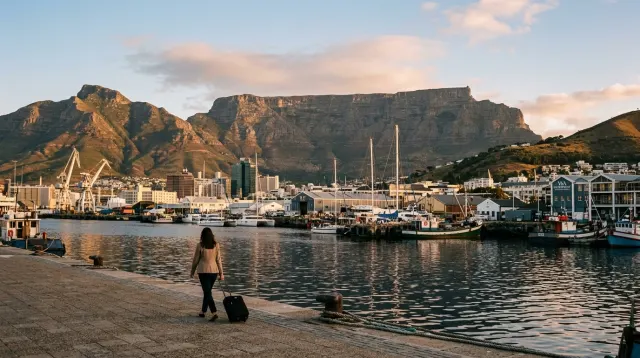
- Business Class flights to Cape Town (CPT) — Table Mountain, the winelands and the coast. The leisure arrival most British travellers picture, and the one destination here where the step up to First Class is unusually small.
- Business Class flights to Durban (DUR) — the Indian Ocean coast, a warmer and more humid climate than the Cape, and the arrival for KwaZulu-Natal and the Drakensberg.
- Business Class flights to Port Elizabeth (PLZ) — the eastern end of the Garden Route and the malaria-free Eastern Cape reserves, which is why families often choose it over a northern safari.
- Business Class flights to Mauritius (MRU) — a resort island trip rather than a touring one, and the destination in this cluster with the largest gap between UK departure airports.
- Business Class flights to the Seychelles (SEZ) — the most remote of the six, closest to the equator and the least seasonal. Also the only one requiring a paid travel authorisation before you fly.
Africa and Indian Ocean fares compared
Six destinations, six fares. These are our own from-prices, checked 20 August 2026 — a briefing to help you choose, not a live availability feed and not a savings claim against anyone else.
| Destination | Airport | Business Class from | First Class from |
|---|---|---|---|
| Johannesburg Business Class | JNB | £1,595 | £2,925 |
| Mauritius Business Class | MRU | £1,577 | £3,776 |
| Cape Town Business Class | CPT | £1,769 | £2,278 |
| Port Elizabeth Business Class | PLZ | £1,972 | £3,068 |
| Seychelles Business Class | SEZ | £1,873 | £3,954 |
| Durban Business Class | DUR | £1,965 | £4,197 |
The Business Class spread across all six is a little under four hundred pounds, which is tight for a region that stretches from the Cape to the equator. The First Class column is where the interesting variation is, and it is covered below.
Why South Africa is such good value for the distance
Put our Johannesburg fare next to the rest of the site and the comparison is stark. At £1,595 it undercuts every Caribbean destination and every North American destination we hold — and the flight is materially longer than either. A Caribbean sector is roughly eight or nine hours. Johannesburg is around eleven.
You are buying more flying, more hours in the bed, and a bigger distance, for less money. That is unusual, and it is worth knowing if you are weighing a winter-sun trip and assuming the Caribbean is automatically the cheaper option in a premium cabin. On our current fares it is not.
We should be straight about the limit of that claim. Johannesburg is not our cheapest long-haul fare overall — several Business Class flights to the Middle East sit below it, and those are shorter sectors. The point is narrower and more useful: against the destinations a British traveller actually compares for a long-haul holiday — the Caribbean and North America — South Africa wins on price while offering more flight for the money.
The no-jet-lag argument, which matters more than the fare
South Africa runs on SAST, UTC+2, all year with no daylight saving. Against UK time that is one hour ahead in British Summer Time and two hours ahead in winter.
The consequence is genuinely unusual for a long-haul trip. You fly roughly eleven hours overnight and land in what is effectively your own time zone. There is no adjustment period at either end — no three days of waking at 4am on arrival, and none of the worse version on the way home.
Compare that with a flight of similar length to the American West Coast or to Asia, where the time difference costs you a day or two at both ends. On a ten-day trip, that is a meaningful share of the holiday.
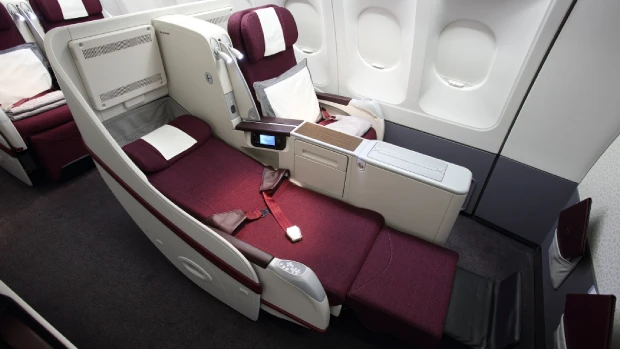
It also changes what you are buying the cabin for. On most long-haul routes a flat bed is partly insurance against time-zone damage. To South Africa it is doing one job only — getting you a real night's sleep on an overnight sector so that you land able to start the day. That is a cleaner value proposition than most, and it is why we rarely talk anyone out of Business Class on this route.
Where London is not the cheapest departure
The usual advice — get yourself to Heathrow — holds on some of this region and fails on others, and the two best-known leisure arrivals run in opposite directions.
Mauritius carries the largest regional advantage in this cluster. Manchester is roughly £350 below London on our current fares, and Glasgow also beats London. Cape Town does the exact opposite — London is cheapest, and Manchester sits about £345 above it.
So the two islands-and-beaches trips most people are choosing between have inverted origin patterns. There is no regional rule of thumb to apply here, which is precisely why it is worth checking rather than assuming.
Manchester also edges Port Elizabeth by around £100. On Johannesburg the Manchester and London fares are within a couple of pounds of each other, which is a tie rather than a finding — we would not move your trip for that. Durban and the Seychelles are cheapest from London.
Each destination lists the UK origins that actually carry its fare with the price against each one, so you can see the real number rather than a general claim.
First Class — and the narrowest step we sell anywhere
Look at the two right-hand columns of the fare table together. The step up from Business to First varies more in this region than the Business fares themselves do.
Cape Town carries the narrowest Business-to-First gap anywhere in our fares — about £510 more than the Business fare, or roughly 1.3 times it. Set against a region where First typically costs twice Business and sometimes more than three times, that is a genuinely small step for a flagship cabin on an overnight sector.
There is an oddity worth naming, because it looks like a mistake and is not one. Cape Town Business is more expensive than Johannesburg Business, while Cape Town First is less expensive than Johannesburg First. Different aircraft and different cabin configurations get scheduled on the two routes, and the number of First seats available to sell differs accordingly.
Mauritius and Durban sit at the other end, with First at over twice the Business fare. If First Class is something you would consider at the right number, Cape Town is the one in this cluster most worth asking about — and we will confirm what is genuinely available for your dates rather than quoting a headline. Our First Class flights from the UK overview covers what the cabin includes.
Reversed seasons — and what they do and do not tell you
South Africa and Mauritius are in the Southern Hemisphere, so their summer is our winter. A British December or January trip to Cape Town or Mauritius lands in warm, long days. A July trip lands in their winter, which at the Cape is genuinely cool and wet, and at Durban is mild and dry.
The Seychelles is different again. Sitting close to the equator, it has far less seasonal temperature variation than either — the year is shaped more by wind and rainfall patterns than by summer and winter.
Two honest caveats. This is geography, not a forecast for your dates. And we are not going to tell you fares are cheaper in a particular month, because your fare depends on your dates and what is available when you ask, not on a seasonal average. If you are weighing two sets of dates, ask us to price both and compare the real numbers.
Entry rules — three destinations, three different regimes
There is no shared rule across this cluster, and the differences are the kind that stop people at a UK departure gate rather than on arrival.
| Destination | Visa | Max stay | Passport must be valid | Before you fly |
|---|---|---|---|---|
| South Africa (Johannesburg, Cape Town, Durban, Port Elizabeth) | Visa-free | 90 days | 30 days after departure, plus 2 blank pages | Nothing required |
| Mauritius | Visa-free | 60 days | Duration of stay, plus 1 blank page | All in One travel form, printed with its QR code |
| Seychelles | Paid travel authorisation | 3 months | Duration of stay | Authorisation applied for and paid, up to 30 days ahead |
The South African blank-pages rule is the one that catches people. Your passport must have at least two blank pages as well as thirty days' validity beyond your departure. A passport that is perfectly valid but full of stamps will be refused — and that check happens before you board in the UK, not when you land. If you are a frequent traveller on an older passport, look at it now rather than at the airport.
The Seychelles authorisation cannot be left to the last minute. It is applied for and paid for online, up to thirty days before arrival, and the application itself requires a return or onward ticket, confirmed accommodation and proof of sufficient funds. That rules out turning up with a loose plan. UK government guidance does not publish the fee, so we will not quote one — check the official Seychelles portal.
Mauritius gives 60 days, not 90, and requires the All in One travel form to be completed and printed with its QR code before you arrive. It also asks for proof of onward or return travel.
One more that is easy to miss: if you hold dual British and South African citizenship and are 18 or over, you must enter and leave South Africa on your South African passport, not your British one.
All of this is from UK government guidance and was accurate when we checked it. Rules change without notice and we are a flight specialist rather than an immigration authority — check the official GOV.UK page for your destination before you travel.
Travelling to South Africa with children
South Africa applies documentation requirements for travellers aged 17 and under, and further requirements for children travelling unaccompanied or with only one parent. These are stricter than most destinations in our range and they are enforced.
We are deliberately not listing the specifics here, because UK government guidance does not itemise them and we are not going to publish a checklist we cannot source — getting this wrong for a family at check-in would be worse than saying nothing. What we will say clearly is: if you are travelling to South Africa with anyone under 18, check the current requirements with the South African Department of Home Affairs well before you travel, and tell us at the enquiry stage so we can flag it on your booking.
UK departure airports
London carries the widest choice across this region, but as set out above it is not automatically the cheapest — Mauritius in particular is materially better from Manchester on our current fares.
Rather than publish a regional grid that would age badly, each destination lists the UK origins that actually carry its fare, with the price against each one. That is a real dated number rather than a claim about what is theoretically possible.
One practical note that applies throughout: a cheaper regional departure sometimes means a connection rather than a nonstop, and a connection costs time and adds risk that the fare does not show. We will put both in front of you and let you weigh them.
Booking an Africa or Indian Ocean itinerary
Tell us the destination, your UK airport, your dates and your cabin. If you are combining a South African city with a safari, a Garden Route drive or an island week, say so at the enquiry stage — the routing and the internal connections are easier to build in from the start than to bolt on afterwards.
We will confirm the operating carrier and the aircraft before you book, and we will tell you when the answer is no. Bookings we ticket are ATOL protected where the scheme applies (ATOL Protected). If you would rather talk it through, call 07862 620009.
Cabin overviews: Business Class flights from the UK and First Class flights from the UK. If you are weighing this region against a winter-sun alternative, the Business Class flights to the Caribbean overview is the direct comparison.
Africa and Indian Ocean Business Class FAQs
Questions for this overview. Destination-specific detail stays with each city and island.
Which African or Indian Ocean destination should I choose from the UK?
Decide first whether you want a country or an island. Johannesburg (JNB) is the commercial capital and the usual safari gateway. Cape Town (CPT) is the leisure arrival most British travellers picture. Durban (DUR) is the warmer Indian Ocean coast. Port Elizabeth (PLZ) is the Garden Route and the malaria-free Eastern Cape reserves, which is why families often pick it. Mauritius (MRU) and the Seychelles (SEZ) are resort islands rather than touring trips.
How much is Business Class to South Africa and the Indian Ocean from the UK?
It varies by destination. As of 20 August 2026 our fares ran from Johannesburg at £1,595 up to Durban at £1,965, with Mauritius £1,577, Cape Town £1,769, Port Elizabeth £1,972 and the Seychelles £1,873 in between.
Is South Africa cheaper than the Caribbean in Business Class?
On our current fares, yes. Johannesburg at £1,595 undercuts every Caribbean and every North American destination we hold, and the flight is longer than either — around eleven hours against roughly eight or nine to the Caribbean. If you have been assuming the Caribbean is automatically the cheaper winter-sun option in a premium cabin, it is worth checking both.
Is Johannesburg your cheapest long-haul Business Class fare?
No, and we would rather say so. Several Gulf destinations sit below it, and those are shorter flights. The narrower and more useful point is that Johannesburg beats the destinations a British traveller actually compares for a long-haul holiday — the Caribbean and North America — while offering more flying for the money.
Is there jet lag flying to South Africa?
Essentially none. South Africa runs on UTC+2 year-round with no daylight saving, so it is one hour ahead of the UK during British Summer Time and two hours ahead in winter. You fly roughly eleven hours overnight and land in what is effectively your own time zone, with no adjustment at either end. That is unusual for a flight of that length and it is the strongest argument for the region.
Is Business Class worth it to South Africa?
On this route the cabin is doing one job rather than two. On most long-haul flights a flat bed is partly insurance against time-zone damage. To South Africa there is no time-zone damage, so the bed is simply buying you a real night of sleep on an overnight sector so you land able to start the day. That is a cleaner proposition than most, and we rarely talk anyone out of it here.
Is London the cheapest UK departure for this region?
Not always, and the two best-known island trips run in opposite directions. Mauritius is roughly £350 cheaper from Manchester than from London, and Glasgow also beats London. Cape Town is the reverse — London is cheapest and Manchester sits around £345 above it. Manchester also edges Port Elizabeth by about £100. On Johannesburg the two are within a couple of pounds, which is a tie rather than a finding. Durban and the Seychelles are cheapest from London.
Why is First Class to Cape Town so close to the Business Class fare?
Cape Town carries the narrowest Business-to-First step anywhere in our fares — about £510 more than the Business fare, roughly 1.3 times it, against a norm of twice or more. It reflects which aircraft and cabin get scheduled on the route and how many First seats there are to sell. It also produces an oddity: Cape Town Business costs more than Johannesburg Business, while Cape Town First costs less than Johannesburg First. We confirm what is genuinely available for your dates rather than quoting a headline.
Does my passport need six months validity for South Africa?
No, but there is a catch that matters more. South Africa needs your passport valid for 30 days after you leave — and it must have at least two blank pages. A passport that is perfectly valid but full of stamps will be refused, and that is checked before you board in the UK rather than on arrival. If you travel often on an older passport, look at it now rather than at the airport.
Do I need anything before I fly to Mauritius?
Yes. Mauritius is visa-free for up to 60 days — not 90, which catches people out — and you must complete the Mauritius All in One travel form online before you arrive, then print it with its QR code to show on entry. Your passport needs to be valid for the duration of your stay and have one blank page, and you need proof of onward or return travel.
Do I need a visa for the Seychelles?
Not a visa, but you must apply and pay for a travel authorisation online before you travel, up to 30 days before you arrive. The application itself requires a return or onward ticket, confirmed accommodation and proof of sufficient funds, so it cannot be left to the last minute and it rules out arriving with a loose plan. On arrival you get a visitor's permit for three months. UK government guidance does not publish the fee, so we will not quote one — check the official Seychelles portal.
What are the rules for taking children to South Africa?
South Africa applies documentation requirements for travellers aged 17 and under, with further requirements for children travelling unaccompanied or with only one parent. They are stricter than most destinations and they are enforced. We are not publishing a checklist because UK government guidance does not itemise one and getting it wrong for a family at check-in would be worse than saying nothing. Check with the South African Department of Home Affairs well before you travel, and tell us at the enquiry stage so we can flag it on your booking.
I hold both British and South African citizenship — which passport do I use?
If you are 18 or over and hold South African citizenship, you must enter and leave South Africa on your South African passport rather than your British one. Tell us when you enquire so the booking is made in the right document.
When is the best time to visit South Africa or Mauritius?
Both are Southern Hemisphere, so their summer is the UK winter. A December or January trip to Cape Town or Mauritius lands in warm, long days; July is their winter, which at the Cape is genuinely cool and wet and at Durban is mild and dry. The Seychelles sits near the equator and varies far less by season, shaped more by wind and rainfall than by summer and winter. That is geography rather than a forecast for your dates, and it is not a fare claim.
How do I get a quote for South Africa or the Indian Ocean?
Use the form on here or email info@myupcomingtrip.co.uk. Name the destination, your UK airport, your dates and the cabin. If you are combining a city with a safari, the Garden Route or an island week, say so at the enquiry stage — the routing is easier to build in from the start than to bolt on afterwards. Bookings we ticket are ATOL protected where the scheme applies (ATOL protected).
Depart from airports near you
UK origins priced across the destinations in this region.
- From London All · LON
- From Manchester · MAN
- From Birmingham · BHX
- From Glasgow · GLA
- From NewCastle · NCL
Compare fares to top Africa destinations
Switch cabin to see each city's own return from the UK.
 Johannesburg Johannesburg (JNB) From £1,595 Our return Cape Town Cape Town (CPT) From £1,769 Our return
  Durban Durban (DUR) From £1,965 Our return
 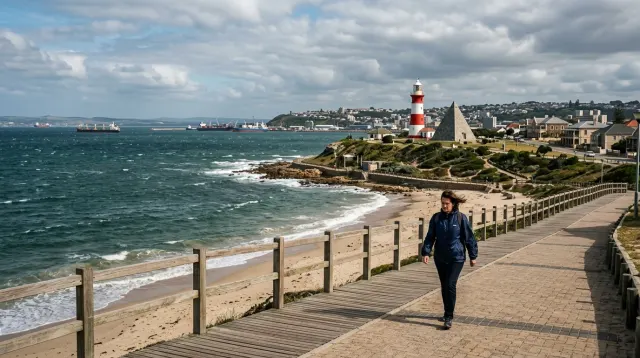 Port Elizabeth Port Elizabeth (PLZ) From £1,972 Our return
  Mauritius Mauritius (MRU) From £1,577 Our return
  Seychelles Seychelles (SEZ) From £1,873 Our return
 Your journey, our priority
A written, dated quote from a UK team — not a checkout you have to second-guess.
- ATOL Protected UK financial protection on bookings we ticket.
- UK travel agency Licensed travel experts, not a screen-scraper.
- UK expert support Speak to someone who knows the routing.
- Flexible dates and cabins Tell us your window; we price around it.
Africa flight FAQs
Questions for this overview. City-specific detail stays with each destination.
Decide first whether you want a country or an island. Johannesburg (JNB) is the commercial capital and the usual safari gateway. Cape Town (CPT) is the leisure arrival most British travellers picture. Durban (DUR) is the warmer Indian Ocean coast. Port Elizabeth (PLZ) is the Garden Route and the malaria-free Eastern Cape reserves, which is why families often pick it. Mauritius (MRU) and the Seychelles (SEZ) are resort islands rather than touring trips.
It varies by destination. As of 20 August 2026 our fares ran from Johannesburg at £1,595 up to Durban at £1,965, with Mauritius £1,577, Cape Town £1,769, Port Elizabeth £1,972 and the Seychelles £1,873 in between.
On our current fares, yes. Johannesburg at £1,595 undercuts every Caribbean and every North American destination we hold, and the flight is longer than either — around eleven hours against roughly eight or nine to the Caribbean. If you have been assuming the Caribbean is automatically the cheaper winter-sun option in a premium cabin, it is worth checking both.
No, and we would rather say so. Several Gulf destinations sit below it, and those are shorter flights. The narrower and more useful point is that Johannesburg beats the destinations a British traveller actually compares for a long-haul holiday — the Caribbean and North America — while offering more flying for the money.
Essentially none. South Africa runs on UTC+2 year-round with no daylight saving, so it is one hour ahead of the UK during British Summer Time and two hours ahead in winter. You fly roughly eleven hours overnight and land in what is effectively your own time zone, with no adjustment at either end. That is unusual for a flight of that length and it is the strongest argument for the region.
On this route the cabin is doing one job rather than two. On most long-haul flights a flat bed is partly insurance against time-zone damage. To South Africa there is no time-zone damage, so the bed is simply buying you a real night of sleep on an overnight sector so you land able to start the day. That is a cleaner proposition than most, and we rarely talk anyone out of it here.
Not always, and the two best-known island trips run in opposite directions. Mauritius is roughly £350 cheaper from Manchester than from London, and Glasgow also beats London. Cape Town is the reverse — London is cheapest and Manchester sits around £345 above it. Manchester also edges Port Elizabeth by about £100. On Johannesburg the two are within a couple of pounds, which is a tie rather than a finding. Durban and the Seychelles are cheapest from London.
Cape Town carries the narrowest Business-to-First step anywhere in our fares — about £510 more than the Business fare, roughly 1.3 times it, against a norm of twice or more. It reflects which aircraft and cabin get scheduled on the route and how many First seats there are to sell. It also produces an oddity: Cape Town Business costs more than Johannesburg Business, while Cape Town First costs less than Johannesburg First. We confirm what is genuinely available for your dates rather than quoting a headline.
No, but there is a catch that matters more. South Africa needs your passport valid for 30 days after you leave — and it must have at least two blank pages. A passport that is perfectly valid but full of stamps will be refused, and that is checked before you board in the UK rather than on arrival. If you travel often on an older passport, look at it now rather than at the airport.
Yes. Mauritius is visa-free for up to 60 days — not 90, which catches people out — and you must complete the Mauritius All in One travel form online before you arrive, then print it with its QR code to show on entry. Your passport needs to be valid for the duration of your stay and have one blank page, and you need proof of onward or return travel.
Not a visa, but you must apply and pay for a travel authorisation online before you travel, up to 30 days before you arrive. The application itself requires a return or onward ticket, confirmed accommodation and proof of sufficient funds, so it cannot be left to the last minute and it rules out arriving with a loose plan. On arrival you get a visitor's permit for three months. UK government guidance does not publish the fee, so we will not quote one — check the official Seychelles portal.
South Africa applies documentation requirements for travellers aged 17 and under, with further requirements for children travelling unaccompanied or with only one parent. They are stricter than most destinations and they are enforced. We are not publishing a checklist because UK government guidance does not itemise one and getting it wrong for a family at check-in would be worse than saying nothing. Check with the South African Department of Home Affairs well before you travel, and tell us at the enquiry stage so we can flag it on your booking.
If you are 18 or over and hold South African citizenship, you must enter and leave South Africa on your South African passport rather than your British one. Tell us when you enquire so the booking is made in the right document.
Both are Southern Hemisphere, so their summer is the UK winter. A December or January trip to Cape Town or Mauritius lands in warm, long days; July is their winter, which at the Cape is genuinely cool and wet and at Durban is mild and dry. The Seychelles sits near the equator and varies far less by season, shaped more by wind and rainfall than by summer and winter. That is geography rather than a forecast for your dates, and it is not a fare claim.
Use the form on here or email info@myupcomingtrip.co.uk. Name the destination, your UK airport, your dates and the cabin. If you are combining a city with a safari, the Garden Route or an island week, say so at the enquiry stage — the routing is easier to build in from the start than to bolt on afterwards. Bookings we ticket are ATOL protected where the scheme applies (ATOL protected).
Ready to explore Africa?
Tell us the city, your UK airport, dates and cabin. Our team comes back with a written, dated quote — ATOL Protected and UK travel agency.