
Economy
From £666
return, per person
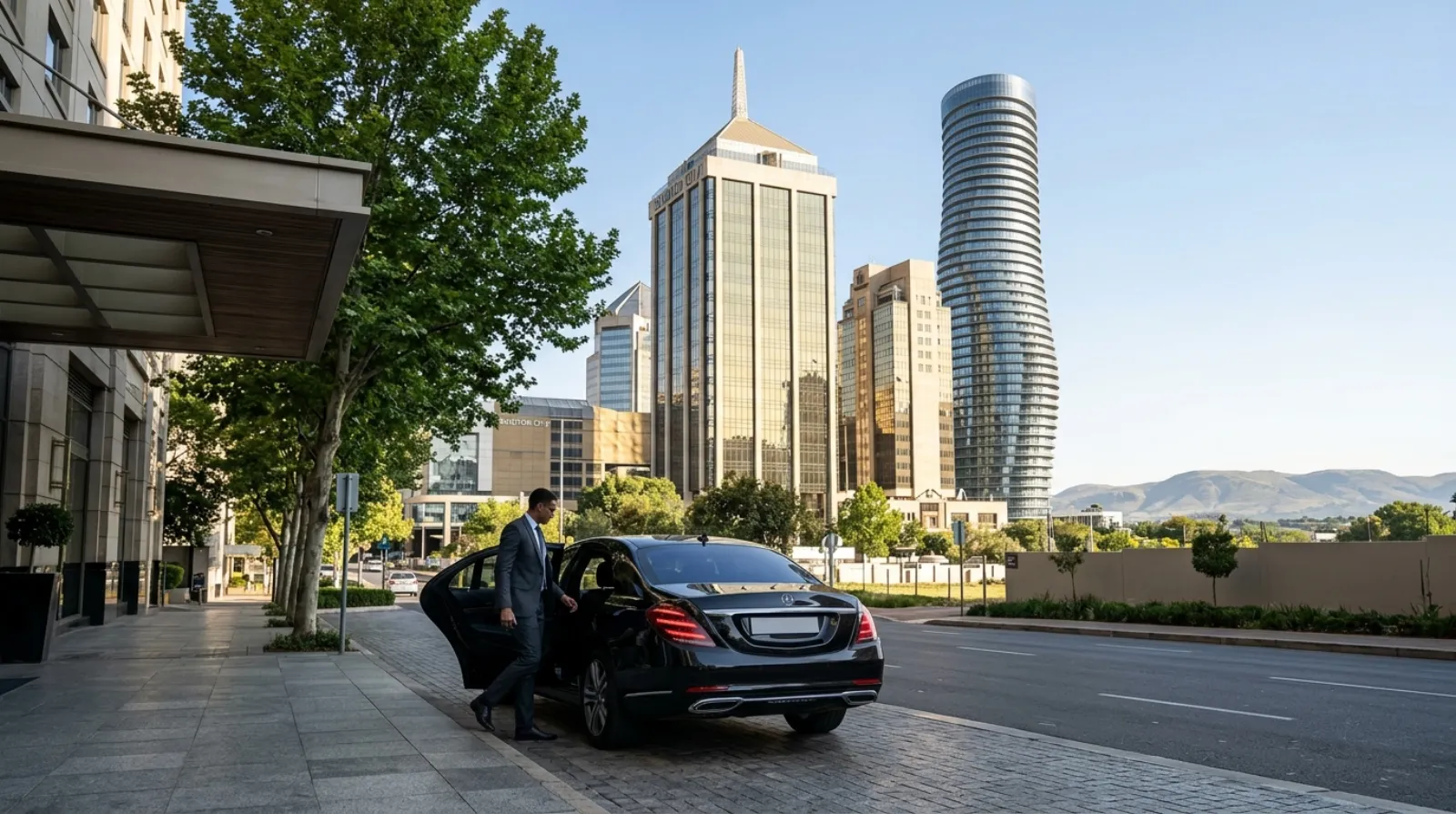
Africa & Indian Ocean · ATOL Protected
ATOL Protected
Business Class flights to Johannesburg from the UK start from £1,595 return — the cheapest African fare in our programme. British Airways and Virgin Atlantic both fly Heathrow nonstop year-round, and no UK airport outside London has one. Manchester is nominally cheaper but only by a couple of pounds, so the nonstop wins outright. South Africa is one or two hours ahead, so there is essentially no jet lag.
Return fares per person from the UK. Your quote is confirmed against live availability for your dates.
Economy
From £666
return, per person
Premium Economy
From £1,003
return, per person
Business Class
From £1,595
return, per person
First Class
From £2,925
return, per person
Our fares. Prices shown for Johannesburg are our own fares, based on recent bookings. Final business class fares depend on your dates, airline and availability. ATOL protected. Get a free exact quote or call 07862 620009.
Manchester MAN → JNB
Business From £1,593
London All LON → JNB
Business From £1,595
Birmingham BHX → JNB
Business From £1,625
Glasgow GLA → JNB
Business From £1,736
NewCastle NCL → JNB
Business From £1,745
A very large share of British travellers pass through rather than stopping, and the hub is built for it.
With five airlines running hub operations, the onward network across South Africa and the wider region is genuinely deep. For a great many southern African destinations there is no alternative routing from Britain that does not involve Johannesburg.
Three things to ask for when you connect. A generous transfer, because you are arriving off an overnight sector and clearing immigration before the onward flight. Clarity on the second cabin — the domestic or regional leg will not be the product that flew you from London. And one ticket rather than two, because the onward carriers are not the airline that brought you.
That last point matters more here than on a single-airline hub. British Airways and Virgin do not run the onward network themselves, so a self-assembled connection leaves you with no single party responsible when something slips.

London All (LON) ⇄ Johannesburg (JNB)
LON → JNB

Manchester (MAN) ⇄ Johannesburg (JNB)
MAN → JNB

Birmingham (BHX) ⇄ Johannesburg (JNB)
BHX → JNB

Glasgow (GLA) ⇄ Johannesburg (JNB)
GLA → JNB
NewCastle (NCL) ⇄ Johannesburg (JNB)
NCL → JNB
Johannesburg is the cheapest Business Class fare in our African programme — and the gap between the cheapest UK departure and London is a matter of pounds rather than hundreds. Manchester and London are effectively the same price. Only one of them has a nonstop.
Business Class starts from £1,595 return. South Africa is an hour or two ahead of Britain, so you fly overnight and arrive with no jet lag worth the name. The rest of the region sits under Business Class flights to Africa, and the wider programme under Business Class flights from the UK.
| Airline | UK airport | Service |
|---|---|---|
| British Airways | London Heathrow | Year-round |
| Virgin Atlantic | London Heathrow | Year-round |
| Any UK airport outside London | — | No nonstop |
Two airlines, one UK airport, and both year-round rather than seasonal. That matters more than it sounds on an African route, where seasonal services are common and the network can contract sharply outside the peak.
Two carriers on the same pair also means two availability pictures, and they do not always agree. A date that comes back closed on the first airline a search engine tries is frequently open on the other — which is why we check both rather than reporting back on whichever returns first.
O. R. Tambo International is the busiest airport on the continent and the place most African journeys pass through, and that shapes what a Johannesburg booking is good for.
Five airlines run hub operations here — Airlink, CemAir, FlySafair, LIFT and South African Airways. Neither British Airways nor Virgin Atlantic is among them; they fly in from London and the onward network belongs to the domestic and regional carriers.
The practical consequence is that if your final destination is anywhere else in southern Africa, Johannesburg is very likely your connecting point whether you planned it that way or not. Durban, Port Elizabeth and a great many smaller cities are reached through it rather than around it.
That makes all of this relevant to a lot of people who are not stopping in Johannesburg at all. If that is you, tell us the final destination rather than just the connecting point — we will price the whole journey as one itinerary, which is both cheaper to protect and far easier to fix.
| UK departure | Business Class from | Nonstop? |
|---|---|---|
| Manchester | £1,593 | No — connecting |
| London | £1,595 | Yes — two airlines |
| Birmingham | £1,625 | No — connecting |
| Glasgow | £1,736 | No — connecting |
| Newcastle | £1,745 | No — connecting |
Per passenger, return. Excl. taxes and carrier charges. Subject to availability.
Manchester is technically the cheapest departure and London is second, and the difference between them is trivial — a couple of pounds on a long-haul fare is not a difference at all.
So on this route the decision makes itself. When the nonstop costs the same as the connection, take the nonstop. You are not weighing convenience against a saving, because there is no saving — and what you gain is an overnight flight without a change of aircraft in the middle of it.
Birmingham sits marginally above them and also connects. Glasgow and Newcastle are noticeably dearer and connect too, which makes them the two departures with nothing to recommend them here.
The whole spread from cheapest to dearest is one of the narrowest in our programme, which means your departure airport is close to a free choice on price. Given that, choose it on the routing instead.
Business Class to Johannesburg starts from £1,595 return per passenger and subject to availability. Other cabins on the same route: Economy from £666, Premium Economy flights from the UK from £1,003, and First Class flights from the UK from £2,925.
Premium Economy sits at a little over six tenths of the Business fare — a conventional gap that leaves a genuine decision. The Economy fare is low for a flight of this length, so the step up from the back of the aircraft is a wide one.
First Class is well over half as much again as Business. That is a moderate step by the standards of our programme, though a long way from Cape Town's, which is the narrowest we sell.
| Destination | Business Class from | UK nonstop |
|---|---|---|
| Johannesburg | £1,595 — the cheapest in Africa | Two airlines, Heathrow |
| Mauritius | £1,577 | Two airlines, Gatwick |
| Cape Town | £1,769 | Three airlines in season |
| Durban | £1,965 | None |
Johannesburg carries the lowest Business Class fare of any African destination in our programme, and it does so while being one of only a handful with a year-round two-airline nonstop.
That combination — cheapest and best-connected — is unusual enough to be worth acting on. If southern Africa is what you want and the city is genuinely open, this is where we would start.
Business Class flights to Cape Town costs more in Business but far less in First, so the answer changes entirely if the cabin above Business is part of your thinking.
South Africa is one hour ahead of the UK during British Summer Time and two hours ahead for the rest of the year. That is the entire difference.
South Africa does not observe daylight saving, so the gap moves only because Britain's clocks do — widening when we go back in October and narrowing when we go forward in March.
The practical effect is that there is essentially no jet lag, and it is the defining advantage of this part of the world for a British traveller. You fly overnight, land in the morning, and your body already agrees with the clock on the wall.
For a business trip that is worth a great deal. You can hold an ordinary British working pattern from Johannesburg without anyone keeping unreasonable hours, which is not true of anywhere in the Americas or Asia at a comparable distance.
Both flights are overnight, which is the trade. You sleep on the aeroplane in each direction or you do not sleep — and that is what makes the cabin decision matter here.
We did not sample a block time for Johannesburg and will not publish one we did not see.
The shape is simple and it is the useful part. From London it is a single overnight sector in each direction — no connection, no second security queue, no border in the middle of your day. You board in the evening and land the following morning.
From anywhere else in Britain, add a connection. On an overnight sector that is more disruptive than it sounds, because the change typically falls at the start of the night rather than after any rest.
Because the time difference is so small, the elapsed journey is simply the elapsed journey. There are no hours gained or lost to complicate the arithmetic — what the schedule says is what the day costs you, which is rarer than you might think.
| Cabin | From | The case for it |
|---|---|---|
| Economy | £666 | Low for the distance, but two overnights in a seat |
| Premium Economy | £1,003 | A little over six tenths of Business — a real saving |
| Business Class | £1,595 | Both sectors are overnight — this is what a bed is for |
| First Class | £2,925 | Well over half as much again as Business |
The argument for Business here rests on the flight pattern rather than the fare, and it is stronger than on a westbound route. Both directions are overnight. On a transatlantic holiday you fly out in daylight and only the return is a night flight; on Johannesburg you are sleeping on the aeroplane twice.
That doubles the value of a flat bed and removes the usual argument for economising on the outbound. If you buy the cabin at all, buying it both ways makes more sense here than almost anywhere.
Premium Economy remains a genuine saving at a little over six tenths of the fare, and on a route where the Economy fare is low, the ladder gives you real choices.
If First Class is in your thinking, look at Business Class flights to Cape Town before you decide. Same country, and the step up there is the shortest we sell anywhere.
| Question | Johannesburg | Cape Town |
|---|---|---|
| Business Class from | £1,595 — cheaper | £1,769 |
| First Class from | £2,925 | £2,278 — far lower |
| UK airlines | Two, year-round | Three, in season |
| London airports | Heathrow only | Both, in season |
| Onward network | The busiest hub in Africa | Domestic and regional |
The two cities answer different questions. Johannesburg is cheaper in Business Class, better connected onward and served year-round by two airlines. Cape Town is dramatically cheaper in First, has a third airline and a second London airport in season, and is the destination people fly to for its own sake.
A great many South African trips involve both, and because the domestic network between them is dense that is an easy itinerary to build. If you are visiting both, arriving into one and departing from the other saves you a domestic sector at the end of the holiday — tell us the shape and we will price the open-jaw.
Our general steer: fly into Johannesburg if you are travelling onward or travelling for work, and into Cape Town if the trip is about the place. If you are doing both, arrive at whichever suits the start of your itinerary and let us handle the rest.
Dual South African and British nationals aged 18 or over must enter and leave on their South African passport. Using another country's passport is illegal rather than merely discouraged, and it affects a real number of British travellers with South African family.
The two blank pages are what we would check first. It is a small requirement, easy to fail if your passport has seen use, and far easier to fix months ahead than at a check-in desk.
It is worth understanding why it exists. South Africa stamps on entry and again on exit, and on a connecting itinerary through Johannesburg to another African country you may collect several more. A passport with one page left is genuinely a problem rather than a technicality, and the requirement is enforced at the UK end as well as on arrival — airlines will decline to board you rather than risk carrying someone who will be refused.
South Africa applies documentation rules for under-18s that most destinations do not, and they deserve more than a bullet point.
The requirements differ depending on whether a child is travelling with both parents, with one parent, or unaccompanied, and they are set by the Department of Home Affairs rather than by the airline. The detail changes, which is why we point you at the source rather than printing a version that may have moved.
What we will do is raise it at the quoting stage if children are travelling, so there is time to assemble whatever is needed. The failure mode is not a fine at the far end — it is being refused boarding in Britain, which ends the trip before it starts.
Tell us who is travelling when you ask. On most destinations that is a courtesy; on South Africa it is a practical necessity, and the sooner it comes up the more time there is to sort it out.
If you are flying London to Johannesburg and stopping there, this does not apply. If you are connecting at either end, it is the most important thing here.
| If a flight is delayed | One through ticket | Two separate bookings |
|---|---|---|
| Getting you there | The airline's problem | Yours, at your own cost |
| Minimum connection | Protected | Whatever you guessed |
| Bags | Usually checked through | Collect and re-check |
| Missing the overnight sector | Rebooked on a later service | A new long-haul fare |
On an overnight route, missing the flight does not mean waiting two hours — it means waiting a day. We price it as one journey by default and will say plainly if splitting it is genuinely worth the saving on your dates.
A few practical points, because a Johannesburg arrival is unlike most long-haul arrivals.
You land in the morning after an overnight flight, and your body already thinks it is morning because it very nearly is. There is no adjustment and no argument with your own clock, which means the first day is a real day rather than a write-off.
O. R. Tambo is the busiest airport in Africa and the European arrivals cluster in the morning, so you land alongside other long-haul flights. It is a well-drilled operation, but a queue is a queue.
The advice is the opposite of what we give on most long-haul routes: do not sleep on arrival. You do not need to, and doing so is the one reliable way to manufacture jet lag on a route that otherwise has none.
We would rather set this out plainly than let you find it after booking.
It suits you if you can depart from London, and it suits business travellers particularly well. The near-absence of a time difference means a short trip actually works — three days in Johannesburg is three days, not three days plus recovery at both ends.
It suits you less if you are tied to a regional UK departure. Every one adds a connection to an overnight sector, and because the fares are so close together you gain almost nothing financially for accepting it.
It also suits you less if First Class is what you are after, because Cape Town offers a far shorter step up for a similar journey to the same country.
If either applies, say so when you ask and we will be honest about the trade rather than quoting the flight you named.
Send us your dates, your nearest UK airport, who is travelling and whether Johannesburg is where you are stopping or where you are changing. We will check British Airways and Virgin Atlantic separately because their availability rarely matches, build any onward sector on the same ticket rather than separately, raise the children's documentation rules if they apply, and compare Cape Town honestly if First Class is part of the plan.
Business Class availability to Johannesburg is sold in limited buckets, so moving a departure or return by a day or two can change which fares are open to you.
We hold fares from 5 UK departure points to Johannesburg, and they are not the same. Tell us which airports you can realistically use and we will compare them together.
Two fares to Johannesburg at a similar price can differ on connection time, total journey time, cabin on each sector, baggage and how the ticket can be changed.
A lower fare with a very long layover, an overnight wait or a change of terminal may not be better value than a slightly higher fare with a shorter, simpler connection.
If your plans could move, ask about change and cancellation conditions before you book. Flexibility is part of the price, and it is worth pricing deliberately.
We compare premium-cabin itineraries to Johannesburg from UK airports, not from a single gateway, so your realistic departure options are priced together.
We look at the routing, connection, cabin on each sector and fare conditions alongside the price, rather than quoting only the lowest headline number.
A UK travel consultant answers your enquiry, so you can ask about routings, seats and timings that an automated search will not explain.
Your quote confirms the flights, operating carrier, cabin, baggage allowance and fare conditions in writing before you pay anything.
My Upcoming Trip is a UK travel agency specialising in premium cabins. We book Johannesburg regularly, so you are talking to someone who knows the route rather than reading a listing. Our fares to Johannesburg (JNB) are our own, priced from London, Manchester, Birmingham and other UK airports. What you pay depends on your dates, the airline and what is still available when we quote, so treat the figure above as a starting point. Before you pay we confirm the itinerary, the airline, the cabin actually fitted on your aircraft, the baggage allowance and the fare conditions in writing. If a neighbouring Africa & Indian Ocean route would suit you better, we will price that alongside it and tell you honestly which one we would book.
Send us your dates and we will price the itinerary by hand, confirm availability and set out the fare conditions in writing.
ATOL Protected
ATOL Protected No spam — details stay with our UK desk
Saved on this device only — pick up where you left off
Search a route or open a destination and it will be saved here so you can come back to it.