On this page (14)
- The question most lounge comparisons get wrong
- First, check your ticket actually gets you in
- Heathrow: four lounges doing four different jobs
- Doha: Al Mourjan – The Garden
- Dubai: network convenience over lounge ranking
- Singapore: excellent, when Changi is on your map
- The factor that decides it: how long will you actually be there?
- So which is best for your trip?
- What we check before recommending one of these routings
- What you will actually use: a practical breakdown
- Two worked examples
- What happens when things go wrong
- How to use this comparison
- Verify before you fly
Quick answer
Doha's Al Mourjan is the strongest of the four, but the cheapest Business Lite fares carry no lounge access at all. A route-first comparison for UK travellers, built around fare brands and usable connection time.
Quick answer: For most UK travellers the honest answer is that Doha's Al Mourjan – The Garden is the strongest business class lounge of the four, but it is also the one you are most likely to be locked out of, because Qatar's cheapest Business Lite fares carry no lounge access at all. Heathrow is a departure lounge question, Doha, Dubai and Singapore are transit lounge questions, and the deciding factor is almost always how many usable minutes you have on the ground.
The question most lounge comparisons get wrong
Almost every “best business class lounge” article ranks these four as though you were choosing between them. You are not. On a normal UK itinerary you will use two of them on the same ticket: one at Heathrow before you leave, and one at whichever hub your airline connects through. They are doing completely different jobs, and judging them on the same scale produces advice that does not survive contact with a real booking.
A Heathrow lounge is somewhere to absorb time you chose to spend there. You arrived early because you did not want to risk the M25, or because a single evening departure is the only sensible flight to your destination. You may have two or three hours, and the lounge sets the tone for the trip.
A hub lounge is somewhere to survive a handover between two flights, and you did not choose how long that handover lasts — the schedule did. If your connection in Doha is 65 minutes, the finest lounge in the world is worth almost nothing to you, because you will walk past it. If it is four hours at two in the morning, a shower and a quiet dark corner are worth more than any à la carte menu.
So the useful question is not “which lounge is best?” It is “on the specific itinerary I am about to buy, which lounge will I actually be able to use, for how long, and does that justify the fare difference?” That is the question this guide answers.
First, check your ticket actually gets you in
This is the part that catches people out, and it is worth putting before any description of marble and à la carte dining. Business class lounge access is not automatic. It is a benefit attached to a fare type, and the cheapest business class fares increasingly strip it out.
This is a fare-brand question rather than a cabin question, and we cover how the brands differ in our guide to business class fare types.
Qatar Airways is the clearest example. Its Business Lite fare — normally the cheapest business class price you will see on a comparison site — does not include Al Mourjan lounge access. You can fly in the Qsuite, land in Doha, and be turned away from the lounge that was the reason you were excited about the routing. Passengers who upgraded from economy do not get access either, and oneworld elite status alone will not get you into Al Mourjan.
That single rule reverses the ranking for a lot of travellers. A Qatar Business Lite fare to Bangkok is not the same product as a Qatar Business Classic fare to Bangkok, even though both say “Business Class” on the booking page and both put you in the same seat. If the lounge is part of why you are paying the premium, the fare brand matters as much as the airline.
| What you booked | Hub lounge access | What to check before paying |
|---|---|---|
| Cheapest “Lite” business fare | Often excluded | Read the fare-rules panel, not the cabin name |
| Standard / Classic business fare | Normally included | Confirm it covers the connecting sector too |
| Upgraded from economy | Usually excluded | Ask specifically — cabin and benefits differ |
| Business on a partner-operated leg | Varies by carrier | Check who operates each sector, not who sold it |
We treat this as a booking question rather than a luxury question. If a client tells us the lounge matters, the fare brand goes into the quote alongside the price, because a £120 saving that removes lounge access on a nine-hour layover is not a saving.
Heathrow: four lounges doing four different jobs
Heathrow is not one experience. Your terminal is decided by your airline, and the gap between the best and the most ordinary lounge at Heathrow is wider than the gap between two hub lounges.
Terminal 3 — the strongest departure lounges
Virgin Atlantic's Clubhouse is the outlier at Heathrow. It behaves less like an airline lounge and more like a members' club: a proper cocktail bar with bartenders, a brasserie where you order from a menu, spa treatments and an outdoor terrace. It rewards arriving early in a way no other Heathrow lounge does. If you have three hours before an evening departure, the Clubhouse converts dead time into part of the holiday.
The Emirates Lounge is also in Terminal 3, recently refreshed, with hot and cold dining, a decent bar and showers. It is comfortable and calm rather than remarkable — which is arguably correct, because Emirates knows the main event is Dubai.
Terminal 5 — British Airways
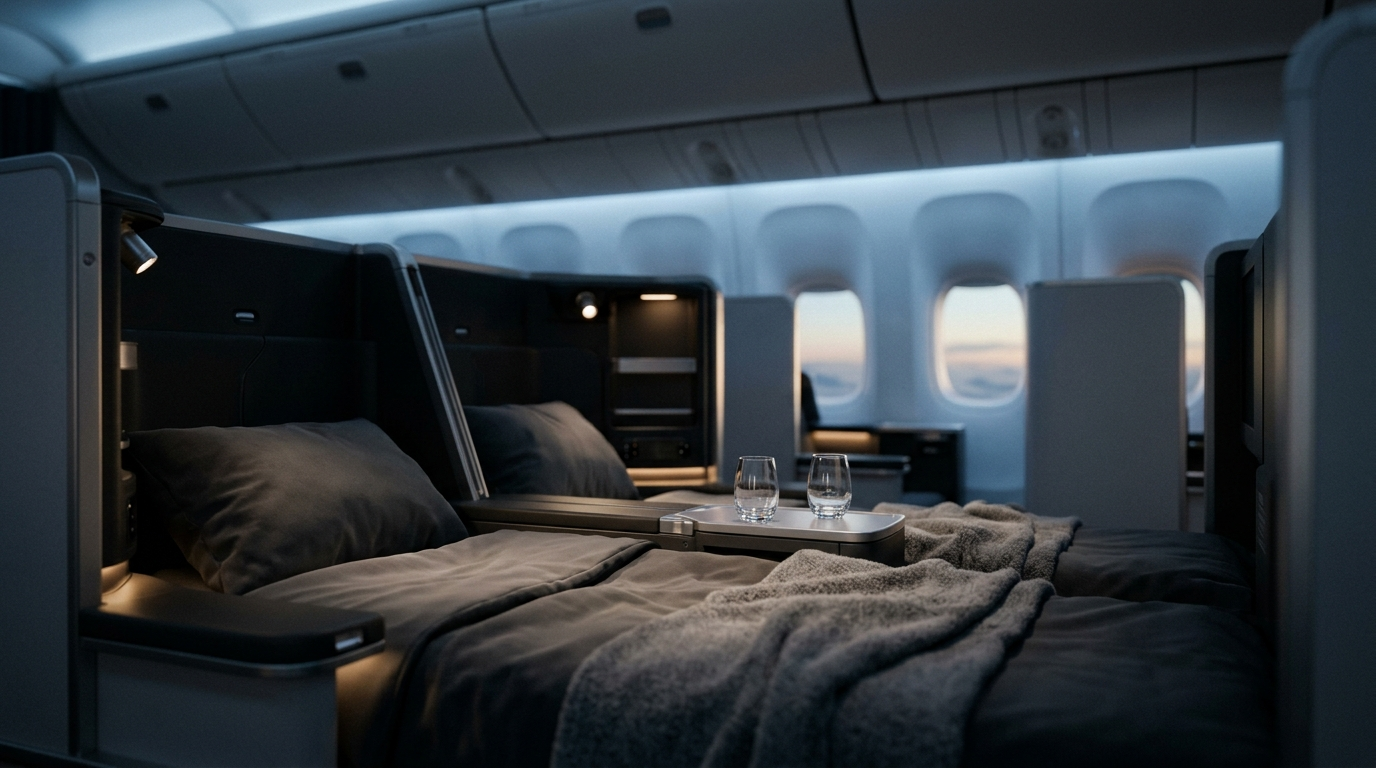
British Airways runs its Club World operation from Terminal 5, and the honest summary is that the T5 lounges are functional at scale. They are large, they are busy at peak departure banks, and they do the job. For a BA passenger the lounge is rarely the reason to choose the airline; the flat-bed Club Suite and the direct routing usually are.
Terminal 4 — Qatar Airways
Qatar's Heathrow flights leave from Terminal 4, and the Premium Lounge there is deliberately the opening act. It is calm and well run with proper dining, but nobody flying Qatar should judge the airline on it. Its job is to hand you over comfortably to Doha.
Terminal 2 — Singapore Airlines
The SilverKris Lounge sits airside near the B gates, refurbished to match the airline's Changi design language. It is the pick of the Star Alliance options at Heathrow: quiet, well staffed and genuinely restful.
The practical point is that terminal choice is baked into your ticket. Booking the right airline at the wrong terminal for your circumstances — a T4 departure when you are arriving by Heathrow Express with 50 minutes to spare — makes the first hour of a premium trip stressful for no reason.
Doha: Al Mourjan – The Garden
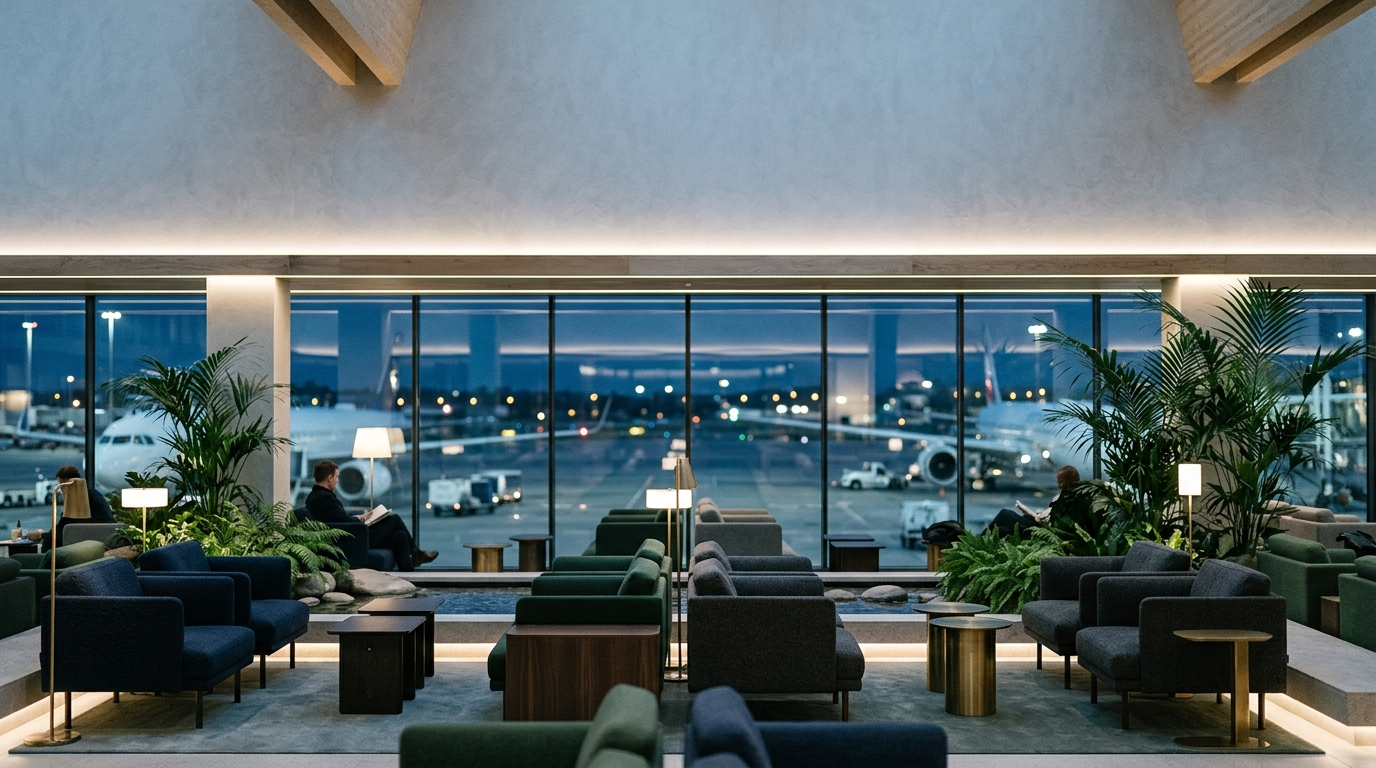
Al Mourjan – The Garden at Hamad International was named World's Best Business Class Lounge at the 2025 Skytrax awards, and on the evidence it deserves it. It runs to over 10,000 square metres, with high ceilings, water features and planting that genuinely mute the noise of one of the busiest transfer airports on earth. There is à la carte dining as well as a buffet, private shower suites and a proper business centre, and it is open 24 hours.
What makes it matter for UK travellers specifically is the shape of the routing. A large share of UK–Asia and UK–Australia itineraries through Doha arrive in the small hours and connect onward before dawn. That is exactly when a 24-hour lounge with real showers and quiet space stops being a luxury and starts being the difference between arriving functional and arriving wrecked.
The caveats are the ones above: Business Lite fares are excluded, upgrades are excluded, and elite status alone will not get you in. Qatar also publishes connection conditions — broadly, first and business customers connecting the same day, or before 6am the following day, between a long-haul international flight (scheduled longer than five hours) and an onward sector. If your itinerary is unusual, that is worth confirming rather than assuming.
Dubai: network convenience over lounge ranking
The Emirates business class lounge at Dubai is enormous — capacity in the region of 1,500 guests — with open atriums, seating pods, nap pods, a business suite and a children's playroom. It boards directly, which on a tight connection is worth more than any amount of design.
Scale is also its weakness. At peak transfer banks it can feel like a very well-appointed terminal rather than a retreat, and if you are looking for the calm that Doha manages, you may not find it. What Dubai gives you instead is network breadth: more UK departure points, more frequencies and more onward options, which often means Emirates can build an itinerary from Manchester, Birmingham, Glasgow or Newcastle that simply does not exist on another carrier.
For a lot of regional UK travellers that is the real argument. A slightly less serene lounge on a routing that leaves from your actual airport beats a better lounge that requires a domestic connection to Heathrow first.
Singapore: excellent, when Changi is on your map
The SilverKris Lounge at Changi benefits from sitting inside an airport that is consistently rated among the world's best, and the lounge itself is calm and beautifully run. There is a hawker-style food station that runs late and is not on the printed menu — a small detail, but a good illustration of the difference between a lounge that is designed and a lounge that is operated well.
The honest qualification is geographic. Singapore is a superb hub if your destination is Southeast Asia, Australia or New Zealand. Routing through Changi to reach Dubai, the Gulf or most of India makes no sense, however good the lounge is. Changi also gives you a genuinely usable airport outside the lounge, which matters on a long layover in a way it does not in most hubs.
The factor that decides it: how long will you actually be there?
This is where a lounge comparison becomes a booking decision. Work out the usable time, not the scheduled connection time.
From your scheduled connection, subtract the walk or train between gates, any security or transfer screening, and the time you need to be back at the gate for boarding. At a large hub, thirty to forty minutes of a connection can disappear this way before you have sat down.
- Under 90 minutes: assume you will not meaningfully use the lounge. Do not pay a premium for it. Prioritise a connection that is comfortably above the airport's minimum connection time instead.
- 90 minutes to 3 hours: the sweet spot for a good hub lounge — time to eat properly and work, without the layover becoming the trip.
- 3 to 6 hours: showers, quiet zones and 24-hour operation matter more than the food. This is where Doha earns its reputation.
- Over 6 hours, or overnight: look at whether the airport has rest facilities or a hotel, and whether a different routing avoids the layover altogether.
A cheaper fare with a six-hour 3am layover and no lounge access is not the same product as a slightly dearer fare with a two-hour daytime connection and access included. Comparison sites show you those two as near-identical rows.
So which is best for your trip?
Rather than a single ranking, here is how we would actually advise, by circumstance.
An evening Heathrow departure, arriving early on purpose. The Heathrow lounge is the one you will use most. Virgin's Clubhouse in T3 is the strongest argument for arriving early anywhere at Heathrow.
The itineraries where this matters most are the long ones — Sydney, Perth and Bali from the UK all involve a hub connection where the lounge does real work.
A long or overnight hub connection to Asia or Australia. Doha, on a Business Classic fare or above. The 24-hour operation, showers and genuine quiet are worth the fare brand.
Departing from a regional UK airport. Dubai will often win by default, because Emirates builds the routing that starts where you actually live.
A tight connection anywhere. None of them. Buy the connection, not the lounge, and spend the money on a schedule that gives you margin.
Travelling with children. Dubai's playroom and Changi's wider terminal facilities are more useful than a quieter lounge you cannot relax in anyway.
What we check before recommending one of these routings
When a UK client tells us the lounge matters, these are the things that go into the quote alongside the fare:
- The fare brand, and whether lounge access is included at that price
- The operating carrier on every sector, not just the airline that sold the ticket
- The Heathrow terminal, and whether the departure time makes an early arrival realistic
- The scheduled connection, minus realistic transfer time, to get usable minutes
- Whether the connection is daytime or overnight, and whether showers are available
- What changes if the aircraft or schedule moves after booking
We do not promise a specific lounge. Airlines change fare rules, lounges close for refurbishment and schedules move. What we can do is make sure the fare you are quoted is the one that actually carries the benefit you are paying for.
What you will actually use: a practical breakdown
Lounge reviews tend to lead with design. Travellers use about five things. It is worth thinking about which of them you personally need, because that decides which lounge suits you far more reliably than a ranking does.
Showers
The single most valuable facility on a long UK–Asia or UK–Australia itinerary, and the one with the most variable availability. Doha's private shower suites are the benchmark. Dubai has them but the queue at a peak transfer bank can be substantial. At Heathrow, showers exist in the better lounges but are far less important, because you are starting your journey rather than eleven hours into it. If you are connecting overnight, ask about shower availability before you assume it.
Somewhere to sleep, or at least lie down
Very few business class lounges offer proper rest facilities, and this is where expectations most often break. Dubai's nap pods are genuinely useful; a reclining chair in a bright, busy room is not. On a layover beyond about six hours, especially overnight, the honest answer is often that a lounge is the wrong solution and an airport hotel or a different routing is the right one.
Food you actually want
À la carte dining, which Doha and the better Heathrow lounges offer, is meaningfully different from a buffet — not because it is grander, but because it is served when you want it and you can eat properly before a night flight rather than being woken for a tray. If you intend to sleep on board, eating well in the lounge and declining the on-board meal is one of the most reliable ways to arrive in better shape.
Working space and connectivity
If the trip is for work, the practical questions are whether there is a quiet zone, whether there are power sockets at seats rather than at a bank on the wall, and whether the Wi-Fi holds up when the lounge is full. Doha's business centre and Dubai's tech-equipped business suite are both designed for this. A lounge that is excellent for a holiday can be poor for a conference call.
Time and stress removed
The most underrated benefit is not in the lounge at all. Direct boarding from the lounge, as Dubai offers, removes a walk and a queue at exactly the moment you are most likely to be tired and disoriented. On a tight connection that is worth more than the entire food offer.
Two worked examples
Abstract comparisons are easy. Here is how the decision actually resolves on two typical UK itineraries.
London to Bangkok, one traveller, work trip
A traveller leaving Heathrow in the evening with a connection in the Gulf. The Heathrow lounge will be used for perhaps ninety minutes; the hub lounge is reached in the middle of the night for a connection of around two hours. Here Doha is the stronger choice, provided the fare is Business Classic or above — the 24-hour operation and the showers land at precisely the moment they help. On a Business Lite fare the same itinerary is a materially worse product, because the lounge that justified the routing is closed to you. If the price difference between Lite and Classic is small, it is usually the easiest upgrade to justify on the whole ticket.
Manchester to Sydney, a couple, holiday
Now the routing matters more than the lounge. Departing from Manchester rather than connecting to Heathrow first removes a domestic sector, an extra bag handover and several hours from the day. Emirates frequently builds that itinerary, and the Dubai lounge — larger, busier, less serene than Doha — is entirely adequate in exchange. The right recommendation here is the one that starts at the airport the travellers can drive to, and no lounge ranking should override that.
What happens when things go wrong
Lounge access during disruption is not the same as lounge access on a normal day. If your flight is delayed or cancelled, whether you can wait in the lounge depends on how the airline re-books you and which cabin the replacement ticket is in — a re-book into economy usually takes the lounge with it, even when the original ticket was business.
Your legal position is separate from the lounge question. For flights departing the UK, and for UK or EU carriers flying to the UK, the Civil Aviation Authority sets out what you are entitled to in terms of care, re-routing and compensation. That is the reference to use during disruption, not an airline's goodwill. A lounge is a comfort; passenger rights are an entitlement, and it is worth knowing the difference before you need it.
How to use this comparison
Lounge rules get more complicated again when partner airlines are involved — see lounge access on partner airlines. And if the connection itself is the concern rather than the lounge, our guide to connecting through Doha, Dubai and Singapore covers how much margin to leave.
Read it in this order. First, decide the routing that suits your trip — departure airport, total journey time, connection quality. Second, check what the fare brand at that price actually includes. Only then look at the lounge, as a tie-breaker between itineraries that are already close. Doing it the other way round — choosing a lounge and then finding a fare — is how travellers end up paying more for a worse journey.
Verify before you fly
Lounge policies change more often than most travellers expect, and they change quietly. Before you book, check the current rules on the airline's own site for the fare brand you are buying — not a review, and not this page. For Heathrow terminal services and Fast Track eligibility, Heathrow's own guidance is the authority. For UK passenger rights if a flight is cancelled or heavily delayed, the Civil Aviation Authority is the correct reference.
Routes in this guide
Related Business Class routes
Current private UK fares for the destinations covered above. Quotes are dated to your itinerary — this is not a live checkout.
Keep reading
Related reading
References
Sources
Rules and fares change. These are the references behind the factual claims above — check them yourself before you travel.
- 1 Qatar Airways Al Mourjan lounges www.qatarairways.com
- 2 Emirates airport lounges www.emirates.com
- 3 Singapore Airlines SilverKris lounges www.singaporeair.com
- 4 Virgin Atlantic Heathrow Clubhouse www.virginatlantic.com
- 5 British Airways lounges www.britishairways.com
- 6 Heathrow Fast Track and airline eligibility www.heathrow.com
- 7 UK Civil Aviation Authority passenger rights www.caa.co.uk
Heathrow, Doha, Dubai or Singapore: Which Business Class Lounge Is Best for UK Travellers? — FAQs
Prefer to talk? 786 262 0009 .
Does every Business Class ticket include lounge access?
No. Lounge access is attached to the fare brand rather than the cabin. Qatar Airways Business Lite fares, for example, do not include Al Mourjan lounge access in Doha, and passengers who upgraded from economy are also excluded. Always check the fare-rules panel for the exact price you are buying, not the cabin name.
Which is the best Business Class lounge for UK travellers?
On facilities alone, Al Mourjan - The Garden in Doha is the strongest of the four and was named World's Best Business Class Lounge at the 2025 Skytrax awards. For a UK trip, though, the best lounge is the one your itinerary actually lets you use, for long enough to matter, on a fare brand that includes access.
How long does a connection need to be to use a lounge properly?
As a working guide, under 90 minutes you should assume you will not meaningfully use the lounge. Ninety minutes to three hours is the sweet spot. Beyond three hours, showers and 24-hour operation matter more than the food. Subtract transfer time and boarding from the scheduled connection to get the usable figure.
Is Al Mourjan open 24 hours?
Yes. Al Mourjan - The Garden operates 24 hours, which matters on UK itineraries to Asia and Australia that connect through Doha in the small hours. Confirm current opening arrangements with Qatar Airways before you travel, as lounge operations can change.
Which Heathrow terminal will I depart from?
It depends on the airline. Virgin Atlantic and Emirates use Terminal 3, Singapore Airlines uses Terminal 2, Qatar Airways uses Terminal 4, and British Airways runs its main Club World operation from Terminal 5. Check the terminal on your specific booking, as airlines do move.
Is the Virgin Atlantic Clubhouse worth arriving early for?
For many travellers, yes. The Clubhouse in Terminal 3 has a staffed cocktail bar, a brasserie, spa treatments and a terrace, and it is the one Heathrow lounge that reliably turns waiting time into part of the trip. That only pays off if your departure time makes arriving early realistic.
Does Emirates or Qatar have the better hub lounge?
Doha is calmer and better regarded; Dubai is larger, boards directly and handles very high volumes. If you value quiet and showers on a long layover, Doha usually wins. If you are departing from a regional UK airport, Emirates often wins on routing before the lounge is even considered.
Can I pay to enter a Business Class lounge if my fare excludes it?
Sometimes. Al Mourjan has published a paid access price, and several lounges sell entry subject to capacity. Treat paid entry as a fallback rather than a plan, because access can be refused when a lounge is full.
Does oneworld or Star Alliance status get me into these lounges?
Not always. Elite status alone does not grant entry to the Al Mourjan lounges, although other lounges are provided for frequent flyers. Alliance status and fare-based access are separate systems, so check both against your specific booking.
Should I choose my airline based on the lounge?
Rarely. The seat you sleep in, the total journey time and the connection quality affect the trip far more than the lounge. Treat the lounge as a tie-breaker between two itineraries that are otherwise close, and make sure the fare brand includes it before paying extra.